Social Science Dimensions
  • Home
  • Services
    • Impact Assessment, Monitoring and Evaluation, and Social Research
    • Land Research and Policy
    • Justice and Dispute Resolution
    • Political Economy Analysis
    • Governance and Conflict and Fragility Analysis
    • Sustainability and Natural Resource Governance
    • Rural Development
    • Project Design and Proposal Development
    • Health
  • Portfolio
    • Portfolio Standard
    • Portfolio Mobile
  • Approaches
    • Survey Design
    • Data Management
  • Blog
    • Chronological Blog
  • Contact
  • Resources / Library

Three Ugly Moments on the Campaign Trail

16/5/2025

1 Comment

 
Picture
Graham Ring on the 2025 Australian Election
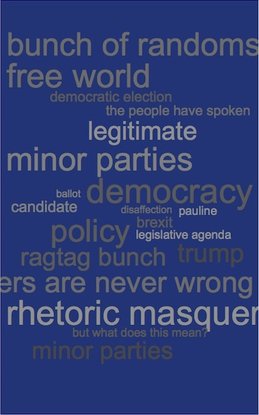
Australian politics is as crook as a dog.  The days when we could have a gentle conversation about issues with people who saw things differently are in the rear-vision mirror. Politics now is about anger, bitterness and one-upmanship.  This is an ugly era of ‘echo-chamber’ chat groups where we only encounter others of like mind, and algorithms that feed us the kind of news we’ve indicated that we already like. We don’t hear different opinions because we don’t want to.

This dynamic has terrible consequences. We’ve forgotten how to ‘disagree agreeably’, so political discussion quickly descends into personal abuse. We are careening towards the kind of polarization which has rendered the US political system all but unworkable.  Now it’s all about party politics, with battles that have identifiable winners and losers.  The idea that our politicians might work together to come up with ideas to improve the lives of ordinary Australians is considered hopelessly naïve.

At a campaign function in the Hunter region of NSW Prime Minister Albanese slipped and fell from a stage. Fortunately, he was not hurt, and with a sheepish grin he regained the platform, presumably with a nod of thanks to the man beside him who had cushioned his fall. This unremarkable event got a run on the television news that evening because it provided some visual relief from the drudgery of political speechifying and choreographed media events. But the caravan did not move on.

Incredibly, the tumble became the subject of media analysis. There was forensic investigation as to what constituted a ‘fall’, as distinct from a ‘slip’. One media outlet reported the PM as ‘denying’ that he had slipped.  Political staffers doubtless searched for a ‘form of words’ to ‘minimize the damage’.  The staggering waste of column inches that followed beggared belief. People sometimes slip.

Earlier in the campaign Opposition Leader Peter Dutton did something extraordinary. He went on national television and said “I think we made a mistake and I think it’s important to recognize that.”  He was, of course, widely pilloried for the heinous political crime of ‘flip-flopping’. Internal party polling had shown that the electorate was not impressed with Dutton’s proposal to curtail working from home. Hence the policy was reversed – if only as a matter of political convenience rather than high principle.

Surely, it’s refreshing to hear a politician own up to a mistake, regardless of the reason. This is the behaviour we seek to instil into our children. This is the way we hope our friends and family will conduct themselves. Einstein reputedly said that a man who never made a mistake has never tried anything new. We need our politicians to be braver than that.  If we expect them to be flawless then we are – in the words of Alan Alda’s West Wing character – just begging to be deceived. We should forgive them the odd error if they are prepared to acknowledge it.  People sometimes make mistakes.

In the dying days of the campaign, Trump’s wildly volatile tariff policies became a hot issue. Do you have Trump’s mobile phone number? Are you strong enough to fight with a great power in Australia’s national interests?  Do you have the ticker? That’s why the radio journalist pinned the PM with the pointed enquiry “If you win the election will you fly immediately to Washington?”

Political pundits will recognize that there is no right answer to this question. A ‘Yes’ answer will be portrayed as a PM whose first act of a new term is to flee the country to prostrate himself before the world’s most powerful man.  A ‘No” answer says that the PM doesn’t understand the seriousness of the issue and/or lacks the gravitas to win an appointment with the president.

Politicians have become exceedingly skilled at evading this kind of questioning. Even novice politicians will skip past this kind of enquiry with generic waffle: “Look David, what we are about is getting the country going again by supporting industry to create the jobs which will enable us to build the houses we so desperately need to help ordinary Australians to live more fulfilling and productive lives …”  Skilled exponents can prolong this drivel until such time as the frustrated journalist interrupts to try another tack.

This sort of exchange may make for entertaining radio, but it obscures the fact that we are not learning anything about how our leaders intend to move the country forward.  Our superficial enthusiasm for political drama reinforces the idea that this is the way we want politics to be conducted.  This kind of ‘gotcha’ journalism punishes politicians who won’t take a definitive position, even when a situation demands caution and further thought. It excoriates leaders who - hopefully after much reading, talking and thinking - have the temerity to alter their position on an issue.

The moral highpoint of the campaign was reached with Peter Dutton’s gracious concession speech. Dutton – doubtless struggling with the news that he would probably lose his own seat – congratulated Mr Albanese on his victory. He generously observed that the PM’s mum – who raised Albanese in often difficult circumstances - would have been very proud of her son tonight.

Equally, the PM’s victory speech was notable for its absence of triumphalism. An understandably overjoyed PM instead made the theme of his address one of gratitude and responsibility. Right at the death of this ugly five-week-long campaign civility shone through. Treasurer, Jim Chalmers, commenting for a television network, was moved to muse about just when it became weak to be respectful and compassionate.

Politics in the USA has become grotesquely polarized and is now hopelessly dysfunctional. The president taunts his adversaries with schoolyard-bully nicknames. Unelected officials eviscerate the machinery of government without any clear mandate. People are swept off the street and incarcerated in foreign prisons without due process.

It would be catastrophic to import this kind of brutality into the Australian political firmament. Peter Dutton’s description of the Guardian and the ABC as ‘hate media’, and Senator Price’s imprecation to ‘make Australia great again’ were both dark harbingers.

Australian politics is characterized by performative mud-slinging that is conducted on a bed of fundamental decency. Civility in our politics is critically important and we must be vigilant in its preservation.

Graham Ring
Darwin
May 2025

1 Comment

Australia and New Zealand can make Solomon Islands a ‘Pacific family’ offer China can’t match

30/10/2022

0 Comments

 
Picture

Rod Nixon

First published 1st April 2022 on the Australian Strategic Policy Institute (ASPI) site (The Strategist).*

T​he announcement by the Solomon Islands government that it intends to ‘broaden its security and development cooperation with more countries’ has provoked a rash of commentary from Australian and New Zealand journalists, academics, think-tankers and politicians. Amid the calls to ‘amass an amphibious invasion force’ or offer the Solomons an Australian naval base, is there potential for a ‘Pacific family’ solution?

The commentary erupted on 24 March after a leaked draft security agreement between Solomon Islands and China was circulated online. Controversial elements of the document include the following two provisions:
  • 'Solomon Islands may, according to its own needs, request China to send … armed police, military personnel and other law enforcement and armed forces to Solomon Islands to assist in maintaining social order …'
  • 'China may, according to its own needs and with the consent of Solomon Islands, make ship visits to, carry out logistical replenishments in, and have stopover and transition in Solomon Islands, and the relevant forces of China can be used to protect the safety of Chinese personnel and major projects in Solomon Islands.'
The agreement also features a confidentiality clause that says: ‘Without the consent of the other party, neither party shall disclose the cooperation information to a third party.’

While the deal has now been ‘initialed’ by Chinese and Solomon Islands officials, it is still yet to be formally signed.
​
Reflecting the possibility of secretive negotiations for a Chinese naval base in Solomon Islands, reactions from commentators covered the spectrum from ‘wake-up call’ to Australia’s own ‘Cuban missile crisis’.

Notwithstanding different positions along the alert–alarm spectrum, there’s broad agreement among commentators that Australia’s foreign policy approaches have proved inadequate, regardless of the funds spent on programs.

Meanwhile, a statement on Solomon Islands issued jointly by Australia’s foreign minister and minister for international development and the Pacific gave little indication of alarm, but within 417 words made five references to Australia’s ‘Pacific family’, with whom Australia stands ‘shoulder-to-shoulder … through good times and bad’.

The statement affirmed that Australia respects ‘the right of every Pacific country to make sovereign decisions’; referred to $22 million Australia has provided to the Solomons for budget support and record regional development assistance; and pledged that Australia would ‘be transparent and … continue supporting peace, economic prosperity, stability and democratic values across our region’.

A higher level of concern was articulated in an ABC article that quoted Solomon Islands opposition leader Matthew Wale saying he had warned Australian officials in late 2021 that ‘China would likely try to establish a military presence in Solomon Islands … but the Australian government did nothing about it’. The article also quoted Australian international affairs expert Clinton Fernandes warning that the same factors could well play out in Papua New Guinea.

Perhaps the big question is why the government of Manasseh Sogavare, on record for wanting to cooperate with China ‘to build a world that is fair and just’, was negotiating a security agreement with Beijing without first seeking the endorsement of the people of Solomon Islands? An APMI Partners survey carried out in the Solomons in December found that 91% of respondents preferred their nation ‘to be diplomatically aligned more towards … liberal democracies’.

Insight into this question may be provided by a case study by Indo-Pacific researcher Cleo Paskal titled ‘How China buys foreign politicians’. Paskal presents what appears to be evidence of August 2021 payments originating from China to ‘39 of the [Solomons] Parliament’s 50 MPs’. According to Pascal, all of these MPs were ‘supporters to one degree or another, of the Prime Minister’. Alluding to Article 61 of the Solomons constitution, Paskal notes that 39 votes would be sufficient ‘with a small buffer’ to pass an alteration and push through Sogavare’s plan to delay the 2023 election until 2024. ‘And who knows what else he and/or Beijing would like to “adjust”?’ she asks.

We get now to the heart of the problem. As Australia and New Zealand emphasise transparency, sovereignty and democratic values and spend big on multimillion-dollar development projects, the geopolitical landscape may be rearranged by a series of budget bribes to members of Pacific parliaments. For, as Fernandes suggests, there’s no reason to think this vulnerability will be restricted to the Solomons.

Many Pacific islanders have strong links with Australia and New Zealand through education and family dating back to pre-independence times. If the APMI survey data is anywhere near accurate, Solomon Islanders remain strongly drawn to the liberal democratic model. Should, therefore, the leading democracies of the region respond to the strategic competition from China by seeking to make the much-vaunted ‘Pacific family’ more of a reality?

In other words, what policy options might be offered to Solomons government MPs such that alliance with the leading liberal democracies of the region becomes a permanent policy setting? What could be so attractive to the entire Solomons electorate that going against it even for money politics would be unthinkable?

The answer may be something Australians and New Zealanders enjoy most days of their lives—namely, access to a developed job market, education and healthcare. Establishing a path for greater integration of the Solomons and other Pacific island states into a ‘Pacific family’ led by Australia and New Zealand, in return for a common security policy, could settle for good the partner-of-choice question for these states. At the same time, increased opportunities for Pacific workers could provide badly needed labour and help stimulate a regional industrial revival.

Steps towards greater integration of Pacific states would represent a substantial change for Australian and New Zealand foreign policy. However, the audacious geopolitical manoeuvre by China calls for an equally innovative response from the region’s leading liberal democracies.

​* The author is grateful to the ASPI team for editing suggestions.

** Image of road conditions captured during SSD fieldwork in Malaita, Solomon Islands in 2021.
0 Comments

In Memory of Dr James Scambary

18/9/2020

0 Comments

 
Rod Nixon

It was with great sadness that I learnt this week of the death of Dr James Scambary.
 
I first heard of James following his ground-breaking 2006 work on gangs in Timor-Leste. Although I became familiar with his work (later reading every word of his PhD thesis), I had the privilege of sitting down for a good chat with James only a handful of times. This was in Dili a little over three years ago, in advance of the 2017 elections. And what a lovey bloke, what a sharp wit, and what an interesting character. Someone who excelled in academia with his incisive analysis of politics in Timor-Leste, who also managed an additional career as an expert welder. A guy who was clearly as at home on a construction site as he was at an academic symposium or in a Timorese village. 
 
James’ passing is a great loss to the community of analysts and researchers working on governance in the region and beyond. My heart goes out to his family and loved ones at this time.  

0 Comments

SARS 2003 and Coronavirus 2020: A Social Impact Comparison

12/2/2020

0 Comments

 
PictureWuhan in sunnier times
What comparisons can be made, from a Chinese observer’s point of view, between the present Novel Corona Virus outbreak and SARS in 2003? How might the Chinese people see things differently?

As one who resided in China during the SARS outbreak, I offer a perspective or two.

John Guo


​We must start, I think, with the fact that the Chinese Government has been for many years highly respected (if not loved); certainly, immediately post revolution. Subsequent to the 1989 Tiananmen Square uprising, Chinese living standards and personal wealth and comfort have been rising. The population has had 30 years of constant growth and improved living conditions. 

There remain in the cities pockets of poverty; and rural living conditions involve great hardship. Social security, apart from insurance provided with employment by large companies and docked from one’s wages, is close to absent. Basics are cheap; if you get sick you go to a public hospital and queue. The visit will be free, the medicine you will pay for. If you become seriously ill without insurance or savings, you are financially ruined. But none of this is new. Most of it is better and improving. 

China encompasses a vast area with a population greater than the combined populations of Australia, New Zealand, Canada, the UK, the USA, and all Western Europe. Imagine one single government managing all that and you get some notion of the monumental task and achievement in emerging from backward 1940s revolutionary chaos into the economic global powerhouse China is today. It’s no accident. The CCP has done a fair job.

And this was the feeling in 2003 as the country was changing leadership from Jiang Zemin to Hu Jintao. The ‘Three Represents’ was the Party’s mantra at that time. It was claimed to be an opening up of the Party to include businesspeople and the rich; let the bourgeoisie in! An absurd notion from a purely theoretical Marxist point of view, but thought necessary by a now governing party when remaining in power is the game. ‘Socialism with Chinese characteristics’ explained it all away.

Nonetheless, a generally good and optimistic feeling prevailed until SARS burst the bubble somewhat. SARS was mishandled. People were scared. In my company our employment as foreigners continued, but there were no consumers. Everyone wore masks. The company lost a lot of money, but no cities were shut down or quarantined as is the case now. 

In 2003 such a medical disaster was not out of the question. Expectations of the government were lower, but hopeful. The country seemed slowly to be emerging from global isolation. The Olympic Games to be held in in 2008 were beckoning and amid the optimism, fear among the people was greater than anger. And anyway, there was nowhere to express it: social media did not exist.  Nor was there hostility to foreigners, certainly not to American citizens. One must remember that the Chinese name for the United States is Mei Guo which translates as ‘beautiful country’. 

Time passed, and, in forgiving the government, it was understood that lessons had been learned. That is why the present situation is perceived as far more dire. It has become clear that not everyone learned the lessons. The Wuhan doctors who so politically inconveniently raised the issue prior to a major Party conference and propaganda gala in Wuhan just prior to the Spring Festival immediately understood that this was potentially SARS Mark 2. For their efforts, in December 2019, they were detained, interrogated, and temporarily silenced. The horse bolted. 

The Wuhan provincial government is unfairly taking the rap for this. Unfair because it would be a brave provincial government that dared allow bad news to overshadow CCP self-aggrandisement as the annual prelude to China’s major cultural event, the Spring Festival. But watch the Central Government distance itself in the weeks and months ahead.

Now we have whole cities locked down and quarantined. Overseas travel unavailable. Whole sections of the public service and business shut down. Industry stranded. Studies disrupted. Economic growth threatened. Political embarrassment. But the real difference is it comes during President Xi Jinping’s much heralded ‘great rejuvenation of the Chinese nation’. 

The Chinese people had no say in the sudden declaration by Xi Jinping that he would now effectively rule for life. Imagine waking up in a liberal democracy one morning to find that, by fiat, the Prime Minister or President was in place for life with no system whatsoever to replace him or her!  Even Donald Trump has not been able to achieve that. 

The Chinese people had no say in the sudden declaration by Xi Jinping that he would now effectively rule for life.

That this was a truly great shock to the Chinese people has not been fully understood in the West. The only way it could be made to work was for Mr Xi, in assuming the mantle of Mao, to run a ‘Make America Great Again’ campaign and that is precisely what ‘The Great Rejuvenation Of The Chinese Nation’, allied with ‘Belt and Road’ is. Grand visions to entrance and enthuse and soothe the population while the Party reasserts its ironclad ideological control over freedom of speech and association. A parallel anti-corruption drive (both real and political) was extra and popular cover. 

Deng Xiaoping’s crowning achievement of a stable system of 10-year limits on Presidents that allowed for the peaceful transfer of power from one ruler to the next was overnight swept asunder.  There are no parties in China. Just leaders. Now there is no clear path to how the next one will be chosen. Long term systemic instability has been enshrined for the shorter term aims of Xi Jinping. 

The Chinese regard the government and its leaders as the head of the family with certain Confucian expectations: Primarily the safety and security of that family. Mr Xi, by his overblown rhetoric to mask the more unpleasant aspects of his creeping party control over the private sphere, has assumed that familial headship and now risks being seen to have failed.

How does the ‘great rejuvenation’ look now? Stuck at home, with their cities shut down and overseas travel suspended, without work and their offices closed and aware that China has unleashed this plague upon the world the Chinese people are ashamed and embarrassed. What national pride they were developing has been stripped away in full view of the entire world. 

What the Chinese people are suffering is the worst thing that can happen to a Chinese person: a loss of Face. A national loss of face. The nation, under the CCP, has lost international face.  Face (mianzi) is a major matter within Chinese culture. To Western eyes it has been described over the years as ‘inscrutability’. A smile when we expect a look of embarrassment. It’s a Confucian need to always maintain and/or retain dignity of the self and the group.

What the Chinese people are suffering is the worst thing that can happen to a Chinese person: a loss of Face.

To bring shame upon the nation is the most egregious of sins. In this instance the Party has done that and done so by stealth and censorship to protect itself at the expense of the group, the collective; the nation. 

Let me list here one or two comments posted on Chinese social media. These are translations so allow a little latitude. They each offer oblique critical sentiments. To be direct is to risk gaol. That they appeared at all means that either the censors couldn’t keep up or the Party decided it should allow some steam to be let off.

The comments emerged in the wake of the death of Wuhan ophthalmologist Doctor Li Wenliang who was the first to identify Novel Corona Virus in China as a developing new public health threat and who was punished by the CCP for ‘spreading rumours’. His alert was shut down so as not to spoil the Party’s Wuhan party. The party is over now. 

Each set of words below is from a different person. It’s a mere sampling of some. 

Wake up one night
I had an epiphany
It is not the miracle of one ten thousandths of an inch that the kind-hearted people almost expect
It’s a 100% conspiracy orchestrated by the unscrupulous people that’s bound to happen.
Can’t medicine save it?
Can anything save him?
 
Ignorance feeds the vicious flame of selfishness, and even when the epidemic is over, the human environment remains a living hell
 
The death of the righteous, the shame of the people! 
The health of the community line is not only a sound. 

0 Comments

News a la carte

5/2/2020

0 Comments

 
Picture
Graham Ring laments the way news is consumed in the twenty-first century…

Buying a newspaper these days is like buying a coffee: You must first choose the style and flavour you prefer so that a product can be identified to satisfy your requirements.

A sizeable chunk of the population has a taste for the Murdoch broadsheet. Those with deeply conservative views find the fare on offer at the Australian  very much to their liking. Climate change scepticism, cynicism about trade unionism – and a slice of tangy Janet Albrechtsen opinion for dessert.


In the opposite corner are those who prefer to get their version of the news from the Guardian: Compassion for asylum seekers and a determination to reduce carbon emissions quickly and substantially. All garnished with a spicy serve of David Marr.

​What we once knew as the ‘Fairfax press’, known for such mastheads as the Age and the Sydney Morning Herald, now derided as the ‘Channel nine papers’, falls somewhere in the middle of the yawning gulf between the Oz and the Guardian. However, the Herald’s editorial decision to go front page with television entertainment stories calls into question its very credibility as a journal of record.

If you are one of the many that get most of their news on-line then the magic of the algorithm will ensure that you are served up ever more of your favourite dishes. Guardian gourmets are much more likely to receive Tim Flannery than Tony Abbott. Similarly, those who favour the flavour of the Oz will receive the wisdom of John Howard rather than the thoughts of Tim Costello.

Consequently, many of us exist happily in our own little echo chambers, receiving only the diet we demand to confirm our existing views. Our positions harden by the day, as the idiocy of those who hold different positions is made ever more apparent by the tasty morsels thoughtfully served up by the algorithm.


​Consequently, many of us exist happily in our own little echo chambers, receiving only the diet we demand to confirm our existing views

What is missing increasingly is the public space for robust exchange of honestly-held views. Where do things get thrashed out? How do we test our assumptions?  Who ensures that the source of our information is credible? Who is on guard to ensure we are presented with all the relevant information about an issue – rather than just the bits we are going to approve of? 

​The most frightening manifestation of this trend is the alarming phrase “I get all my news from Facebook.” Not to put too fine a point on it, this is the precondition for the decline of civilisation. 
​​
The most frightening manifestation of this trend is the alarming phrase “I get all my news from Facebook.”
​
Woe betide us if we forsake the capacity to cogitate. The opposable thumb on its own will not be enough to negotiate the troubled terrain of the twenty-first century.
 
0 Comments

Democracy: Who buys It?

29/1/2020

0 Comments

 
Should the modern citizen-consumer be doing more to support liberal democracies?
​Rod Nixon

Originally published (in shorter form) by the Asia & The Pacific Society (APPS) Policy Forum on 17 September 2019.
Picture

Free Trade and Authoritarian States

​In retrospect, the accession of China to the World Trade Organisation (WTO) in 2001 was based on extraordinary optimism that a large, populous, economically powerfully authoritarian state would pose no threat to the interests and aspirations of liberal democracies.
The belief in a link between capitalist economic success and political liberalisation has been pervasive. However, the truism that democracy is good for business, with the implication that the reverse also holds, is now ailing.
In the present day, an uneasy relationship exists between the consumers of liberal democracies, and the authoritarian states whose workers produce much of the merchandise these ‘democratic citizens’ consume. In the case of the growing industrial giant of China, the lack of certainty about a link between capitalist economic success and liberalisation was reinforced at the 2018 annual sitting of the Chinese National People’s Congress, when Premier Xi Jinping was appointed President-for-life.[1] The following year, in the highly successful automobile-producing nation of Thailand,[2] the ruling military passed up yet another opportunity to hold a genuinely free and fair election.[3]
 
Linking the 2019 Freedom House ‘Freedom in the World’ assessment (Freedom House 2019), to the 2019 World Bank Ease of Doing Business assessment rankings (World Bank 2019:5), it can be seen that of the top 50 countries (of 190 ranked), only 31 are ‘Free’ according to the Freedom House criteria. A further 10 are classified as ‘Partly Free’ (including Singapore, Hong Kong and Malaysia), with the remaining nine classified as ‘Not Free’. Notably, the latter group includes China, the Russian Federation and Thailand, which combined have a Gross Domestic Product (GDP) of US$15.5 trillion based on 2017 World Trade Organisation (WTO) figures (WTO 2018). Notably, the authoritarian state of China was the world’s leading exporter of merchandise in 2017, with merchandise exports valued at US$2.26 trillion.[4]  What a perverse outcome therefore, that free trade - in the hope of promoting liberalisation – is fostering the development of an authoritarian superpower. 
 
The high-profile exceptions to the supposed rule that economic success necessarily correlates to respect for democratic rights and human freedom highlight two things. The first is the need for a more critical approach to the study of democratic transition. The second is the potential need for new drivers of change. 
 
Merchandise Imports from Authoritarian States into ‘Prosperous Liberal Democracies’
In the interests of exploring potential drivers of change I have taken a look at recent (2016-2017) WTO data. I have framed my analysis around the question of trade between Prosperous Liberal Democracies (PLDs) and authoritarian states. For the purposes of the analysis I define PLDs as members of the Organisation for Economic Cooperation and Development (OECD) that are also accorded ‘Free’ status in the 2019 Freedom House index. While observance of democratic principles is a key requirement for membership of the OECD,[5] the augmented definition used in this article addresses the fact that a number of OECD countries have slipped in their implementation of democratic principles since becoming members. Cross-referencing the 36 OECD countries[6] with the 2019 Freedom House index (Freedom House 2019), it can be seen that only 33 of the 36 OECD countries currently hold ‘Free’ status with Freedom House. Of the remaining three, two (Hungary and Mexico) are rated only ‘Partly Free’ while the remaining country (Turkey) is rated ‘Not Free’.
 
WTO data on merchandise imports by the world’s 33 PLDs, [7] as defined above, clarifies the extent to which PLDs source merchandise from authoritarian states.[8] Notably: 
  • Authoritarian states are the leading source of merchandise imports for six of the 33 PLDs. (Specifically, Australia, Chile, Japan, New Zealand, South Korea and the United States. The source country is China in all cases.)
  • Authoritarian states are among the top two sources of merchandise imports for 27 of the 33 PLDs. (The leading source country in these cases is China followed by the Russian Federation.)
  • Authoritarian states are among the top three sources of merchandise imports for 32 of the 33 PLDs.
  • The data indicates annual merchandise imports by PLDs from authoritarian states of US$1.555 trillion for 2016-2017. For comparative purposes, total exports of merchandise from China (the world’s leading merchandise exporter) for the same period was US$2.26 trillion (WTO 2018:80)
  • Given the total population of the PLDs included in the analysis of 1.067 billion people (2015 figures),[9]this equates to a minimum average annual spending on merchandise sourced from authoritarian states of US$1,456.96 for every citizen of a PLD (not including local/domestic profits, costs and taxes). On average, a minimum of 13.47 per cent of merchandise imports into PLDs is sourced from authoritarian states.[10]
 
What is the Potential for Exerting Leverage?
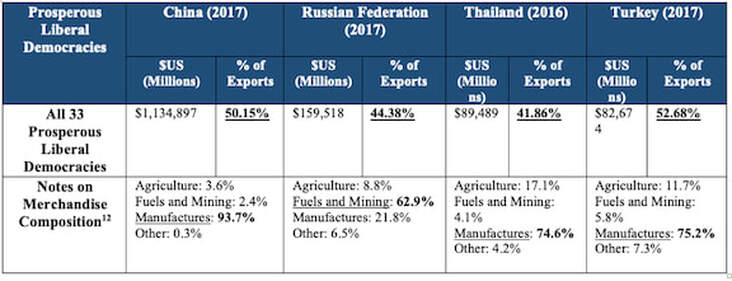
To gauge the potential for leverage it is also important to examine merchandise trade between authoritarian states and PLDs from the opposite angle. Based on World Integrated Trade Solution (WITS) data (World Bank 2017) from the 2016-2017 period, the extent to which key authoritarian states benefit from merchandise exports to PLDs can be assessed. The following table presents summary data on this area for the authoritarian states of China, Russian Federation, Thailand and Turkey.

Table 1: Total Share of Merchandise Exports from Authoritarian States Imported into Prosperous Liberal Democracies[11]
Picture
​As the data tabled above indicates, PLDs consume around 40 to 50 per cent of the merchandise exports of the featured authoritarian states. This data suggests that authoritarian states are significantly exposed to a boycott by PLD consumers, assuming the latter can be sensitised at scale to take action. 
 
It should also be noted that the exposure of particular authoritarian states to possible consumer boycott action is likely to vary according to the profiles of their particular merchandise exports (which includes the main categories of manufactures, agricultural products, and fuels and mining products). Of the authoritarian states profiled above, manufactures represent the majority share of merchandise exports for China (93.7%), Thailand (74.5%) and Turkey (75.2%). Given that the origin of manufactures is generally labelled, a consumer boycott of manufactures sourced from authoritarian states could be relatively straightforward to implement (sensitising consumers perhaps representing the main challenge). Meanwhile, the majority of Russia’s merchandise exports fall into the category of fuels and mining (62.9%), with manufactures at only 21.8%. For Russia and other authoritarian states such as Saudi Arabia[13] for which the main category of merchandise export is fuels and mining (potentially unlabelled products), the organisation of effective consumer action would require a strategy that requires suppliers to clearly state the origin of such products as petroleum fuel. Added to this would be the challenge of promoting alternatives to fuels and mining products traditionally or commonly sourced in authoritarian states.
 
Of the authoritarian states profiled above, China would appear most exposed to an effective consumer boycott of authoritarian states. Not only is China the world’s largest single exporter of manufactures (at US$2.26 trillion),[14] but 93.7% of its merchandise exports are manufactures and over half its merchandise exports (50.15%) were being imported into prosperous liberal democracies at the time of the generation of the featured trade data.
 
Is it Time to Ditch Free Trade and Buy from Democracies?
Given what Freedom House (2019:4-5) describe as a 13-year decline, from 2005 onwards, in ‘political rights and civil liberties’ globally, the merchandise import patterns of the world’s PLDs deserve critical attention. 
 
The scale at which ‘democratic’ consumers have been importing merchandise from authoritarian regimes raises the question of the extent to which the material quality of life of the modern democratic citizen has become dependent on the input of workers operating under authoritarian control.[15]
 
In terms of principles, what does a high level of merchandise importation from authoritarian states suggest about the commitment to human rights and democracy, of citizens of the world’s leading democracies?  In the case of Australia, the nation’s enthusiasm for electoral participation is so strong that the population either supports or tolerates compulsory voting, yet the nation’s leading source of imported merchandise is the authoritarian state of China. Given the increasing uncertainty that capitalist economic success leads inevitably to democratisation, there would appear a pressing need for attention to the following issues and questions:
  • A proportion of every purchase of merchandise originating in an authoritarian state can be expected to be paid in tax to a non-democratic regime. All such resources are disbursed without the oversight of elected representatives, and a proportion may be used to suppress human freedoms (as in the case of ethnic and religious minorities in China) or potentially threaten the interests of liberal democracies. Accordingly, should citizens of liberal democracies be concerned about the impacts of purchasing significant volumes of merchandise from authoritarian states? 
  • What are the costs of no change to trade patterns between PLDs and authoritarian states. Can liberal democracies retain their prosperity and independence under such circumstances?
  • Might the obligations of democratic citizens in the 21st century include purchasing merchandise sourced from democracies in preference to merchandise sourced from authoritarian states, in order to provide an incentive to national elites (and elements able to influence them, including transnationals) to prioritise and advance human rights and democratic values?
 
In recent decades, various campaigns have sought to influence consumer spending patterns in the interests of a range of specific environmental and social causes. Examples of these include the Rainforest Alliance Sustainable Agriculture Network (SAN)[16] and the Marine Stewardship Council.[17] Other campaigns have focussed on human rights issues in particular contexts, with recent examples including a celebrity-led boycott of Brunei after the nation moved to implement Sharia law,[18] and a Codepink boycott of Saudi Arabia for an array of reasons.[19] And yet, to date there has been no systematic attempt to influence consumer spending aimed at leveraging ongoing democratisation in authoritarian states. This is notwithstanding the critical importance of the liberal democracy as the political system that has provided the space for multiple other agendas to be advanced over the last century, across a range of areas spanning human rights, environmental sustainability, gender equality and more. 
 
The Challenge for Citizen-Consumers
As the ultimate custodians and beneficiaries of democracy, it may be up to citizens, or citizen-consumers, to lead a change towards procurement practices that favour democracies. While tariff regimes like the one being currently implemented or threatened by United States President Donald Trump may have an impact, Trump’s behaviour is unpredictable. In any case, states may be bound by commitments to free trade, or addicted to trade partnerships with authoritarian states for economic reasons. No such factors prevent private individual, businesses and local governments from exercising moral judgement in their procurement choices. Furthermore, a boycott of authoritarian regimes that originates with citizen-consumers could contribute to the containment of authoritarian states without implicating the leaders of liberal democracies and thereby risking inter-state tension.
 
                                                                                         * * *
 
A change in consumer behaviour of magnitude sufficient to leverage democratic change in authoritarian states would represent no small achievement. A clear opposing force could be potentially higher prices associated with procuring from alternative sources where externalities such as environmental approvals and worker protection safeguards contribute to increased costs.  Yet there are historical precedents for significant changes to economic patterns on the basis of human rights advances.[20] Furthermore, the rise of India as a democratic, if troubled, manufacturing power may introduce new dynamics. Emphasis on the virtue of procuring from democratic nations could encourage authoritarian manufacturing countries to compete with more democratic rivals.
 
There is unquestionably much about governance in liberal democracies that could be improved. Citizen involvement is often limited to periodic participation in polls, governing parties may deviate from stated positions and attempt to hide unethical conduct from public scrutiny on the pretext of ‘security’, populists may succeed in gaining entry to parliament or even control of government, and electorates themselves may prioritise short-term interests over long-term needs. Yet the world over, people have benefited from progressive political, human rights, and environmental changes that owe their origins to the freedom of inquiry and expression that flourishes in liberal democracies. Is it time for citizen-consumers to target their spending practices to help stem the global recession of liberal democratic values? Is it time to Buy Democratic?
Notes
[1] British Broadcasting Corporation (2018).
[2] According to an Association of Southeast Asian Nations (ASEAN) report (ASEAN 2018), “Thailand is the 13th largest automotive parts exporter [shipping to over 100 nations] and the sixth largest commercial vehicle manufacturer in the world, and the largest in ASEAN”. 
[3] An Asian Human Rights Commission (AHRC) interim report referred (AHRC 2019) to “fundamental democratic shortcomings” with the 24 March 2019 general election in Thailand.
[4] See WTO (2018:80). The United States was in second place with merchandise exports valued at US$1.55 trillion (WTO 2018:382).
[5] In its ‘Framework for the Consideration of Prospective members’, OECD restate (2017:4) the position that ‘OECD Members form a community of nations committed to the values of democracy based on rule of law and human rights, and adherence to open and transparent market-economy principles’.
[6] See OECD (2019).
[7] Based on review of merchandise import and other data included in ‘Trade Profiles 2018’ (WTO 2018) for the economies of Australia, Austria, Belgium, Canada, Chile, Czech Republic, Denmark, Estonia, Finland, France, Germany, Greece, Iceland, Ireland, Israel, Italy, Japan, Latvia, Lithuania, Luxemburg, Netherlands, New Zealand, Norway, Poland, Portugal, Slovakia, Slovenia, South Korea, Spain, Sweden, Switzerland, United Kingdom, and United States. 
[8] Note that imports into ‘prosperous liberal democracies’ from ‘Partly-free’ states are not included in the analysis.
[9] See UNDP 2017.
[10] The total is potentially significantly greater, as the WTO data (WTO 2018) used in the present analysis includes only the leading five sources of merchandise imports for each country. Remaining sources of merchandise imports are aggregated into a category titled ‘Other’. For the PLDs included in this study, the ‘Other’ category averages 21 per cent of total merchandise imports (see Table 4.1).
[11] Sourced from World Bank (2017). The full table is included under Annex 1.
[12] Information on composition of merchandise exports sourced from WTO (2018).
[13] Fuels and mining products comprise 75% of all Saudi Arabian merchandise exports (WTO 2018). Note that Saudi Arabia is not fully profiled in Section 5 because no meaningful information is included in the WITS database (World Bank 2017) concerning the destination of Saudi Arabia merchandise exports.  Specifically, the ‘Unspecified’ category of merchandise exports for Saudi Arabia is reported to be 79.08 per cent.
[14] China is followed by the United States at US$1.55 trillion, based on 2017 data (WTO 2018).
[15] Other trade relationships also emphasise the importance of this theme.  A timely example concerns the 2018 withdrawal of China from the management of overseas waste, a development which highlighted the extent to which some PLDs have hitherto been dependent on an authoritarian state for the recycling of domestic rubbish. See, for example, Semuels (2019) and Cansdale (2019). 
[16] www.rainforest-alliance.org/
[17] www.msc.org
[18] According to the BBC (2019), Brunei announced the intention, on 3 April 2019, to apply the death penalty to offences “such as rape, adultery, sodomy, robbery and insult or defamation of the Prophet Muhammad”. However, following a celebrity-led boycott, Brunei’s ruler Sultan Hassanal Bolkiah was reported to have “extended a moratorium on the death penalty to cover the new legislation”.
[19] The Codepink Saudi Arabia campaign claims “It’s time to sever ties with the Saudi regime while it wages a devastating war on Yemen, murders its own people, tramples on human/women’s rights, and bullies all those who dissent with its policies”. See: https://www.codepink.org/saudiarabia
[20] Such a precedent was the Clapham Common movement which influenced Britain, in the early decades of the 19th century, to transition from the ‘still profitable’ practice of slavery. See Ferguson (2004:114-119).

References
AHRC (Asian Human Rights Commission). 2019. ‘Thailand: Election Did Not Meet the International Standards’. AHRC article dated 27 March 2019, sighted 16 April 2019 at http://www.humanrights.asia/news/forwarded-news/AHRC-FAT-001-2019/
 
ASEAN (Association of Southeast Asian Nations). 2018. ‘Thailand’s Automotive Industry: Opportunities and Incentives’. ASEAN Briefing date 10 may 2018, sighted 16 April 2019 at https://www.aseanbriefing.com/news/2018/05/10/thailands-automotive-industry-opportunities-incentives.html
 
British Broadcasting Corporation (BBC). 2019. ‘Brunei Says it Won’t Enforce Death Penalty for Gay Sex’. BBC news article dated 6 May 2019 sighted 16 May 2019 at https://www.bbc.com/news/world-asia-48171165
 
-   2018. “China’s Xi Allowed to Remain ‘President for Life’ as Term Limits Removed”. BBC news articles dated 11 march 2018 sighted 15 April 2019 at https://www.bbc.com/news/world-asia-china-43361276
 
Cansdale, Dominic. 2019. ‘What’s Changed One Year Since the Start of Our Recycling Crisis?’. Australian Broadcasting Commission (online), 11 January 2019. Sighted 14 May 2019 at https://www.abc.net.au/news/2019-01-11/australias-recycling-crisis-one-year-on-whats-changed/10701418
 
Davidson, Helen and Christopher Knaus. 2019. ‘Australian Weapons Shipped to Saudi and UAE as War Rages in Yemen’. Guardian (online) article dated 25 July 2019 sighted 25 July 2019 at https://www.theguardian.com/australia-news/2019/jul/25/australian-weapons-shipped-to-saudi-and-uae-as-war-rages-in-yemen
 
Ferguson, Niall. 2004. Empire: How Britain Made the Modern World. Penguin: Maryborough (Aust.). 
 
Freedom House. 2019. ‘Freedom in the World 2019: Democracy in Retreat’. Downloaded 5 April 2019 from https://freedomhouse.org/sites/default/files/Feb2019_FH_FITW_2019_Report_ForWeb-compressed.pdf (including “Freedom in the World Countries” table available at https://freedomhouse.org/report/countries-world-freedom-2019).
 
- 2015. ‘Democracy is Good Business’. Freedom House articles sighted 15 April 2019 at https://freedomhouse.org/blog/democracy-good-business
 
OECD (Organisation for Economic Cooperation and Development). 2019. ‘Member and Partners…Current Membership’. OECD current membership list sighted 5 April 2019 at http://www.oecd.org/about/membersandpartners/
 
-   2017. ‘Report of the Chair of the Working Group on the Future Size and membership of the Organisation to Council: Framework for the Consideration of Prospective members’. OECD document sighted 17 April 2019 at http://www.oecd.org/mcm/documents/C-MIN-2017-13-EN.pdf
 
UNPD (United Nations Population Division). 2017. Spreadsheet titled ‘WPP2017_POP_F01_1_TOTAL_POPULATION_BOTH_SEXES’ sourced from the UNPD  World Population Prospects 2017 website. Downloaded 13 May 2019 from https://population.un.org/wpp/Download/Standard/Population/
 
Semuels, Alana. 2019. ‘Is This the End of Recycling?’, in The Atlantic, 5 March 2019. Sighted 14 May 2019 at https://www.theatlantic.com/technology/archive/2019/03/china-has-stopped-accepting-our-trash/584131/
 
World Bank. 2019. ‘Doing Business: Training for Reform’. 16th Edition. Downloaded 15 April 2019 from http://documents.worldbank.org/curated/en/975621541012231575/Doing-Business-2019-Training-for-Reform
 
- 2017. ‘World Integrated Trade Solution’ (WIT) database. Online trade database developed by the World Bank with partners including the United Nations Conference on Trade and Development, the International Trade Centre, the United Nations Statistical Division and the WTO. Accessed 24-28 June 2019 at www.wits.worldbank.org 

WTO (World Trade Organisation). 2018. ‘Trade Profiles 2018’. Downloaded 9 April 2019 from https://www.wto.org/english/res_e/publications_e/trade_profiles18_e.htm 
0 Comments

Some Post-Election Musings

27/5/2019

0 Comments

 
PictureAustralian politics: Glass half full?
Graham Ring reflects on the 2019 Australian Federal Election
On election day, the people of Australia spoke loudly and clearly, leaving no room for doubt about their priorities. They roared as one, in a voice that echoed from Queensland to all corners of the land: 

“We Want More Stuff!”

“We don’t care much for climate change and the need to protect the environment.”

“We are not interested in the plight of refugees and asylum seekers, beyond the thought that we don’t want them to have what is rightfully ours.”

“We feel the unemployed are letting as down, and we have no interest in increasing the pitifully low level of unemployment benefit.”

“We don’t want our taxes to be spent overseas. We have had the dumb luck to be born in one of the wealthiest countries on earth and we intend to wallow in it.” 

“We believe that the sectors we participate in are entitled to greater government subsidies – which should be funded by taking money from the sectors we don’t participate in.

“We want our taxes to go down and our incomes to go up.”

​“This will enable us to Buy More Stuff.”

It’s impossible to avoid the conclusion that most Australians vote in their own short-term self-interest.  “Under which party will I be better off?” is the key question. More esoteric concerns about the kind of community we want to be, and the responsibility we have as custodians of the planet, can take a back seat.  

The Australian middle-class seems to be infected with an entitlement mentality. Despite the fact that our material standard of living has increased enormously in the last fifty years we still want more. A lot more.

As has often been observed, the accumulation of Yet More Stuff somehow doesn’t provide any lasting satisfaction. Clive Hamilton provides much evidence to support this view in his thoughtful book Growth Fetishpublished in 2003 by Allen & Unwin. 
 Australians are rarely moved to seriously examine other options like:
  • Moving away from gung-ho development, particularly the wanton exploitation of our finite natural resources.
  • Considering the possibility that a slightly reduced ’standard of living’ doesn’t have to equate with a decline in our well-being.
  • Commissioning a broad-based panel to review the $38 billion Australia spends on defence each year, to examine whether a proportion of this money could be more effectively spent elsewhere.  
  • Seeking a more secular society.  

The Australian Labor Party – and the labour movement more broadly – was perhaps the single greatest force for good in Australia in the twentieth century.  Mighty victories were won. We saw the establishment of one of most progressive social security systems in the world – now being allowed to run down. We saw the introduction of age-pensions and disability pensions, and housing assistance. We saw parliament pass laws to protect the health and safety of people in their workplaces.   We saw a public health care system which is the equal of any in the world. The value of these contributions can never be diminished.

However, the ALP faces a desperate battle to remain relevant in the face of the complex, shifting issues that confront us in the twenty-first century. Labor is hopelessly compromised by the electoral realities of having to gain the support of the We Want More Stuff brigade. Today it is the Greens who offer more in the way of a vision for the future. Is it conceivable that these two progressive parties can find a way to unite and fight the good fight together?  

Lobby groups like Get Up have also have a key role to play, with their demonstrated ability to react quickly and cleverly to developments.  They are both legitimate and purposeful in a pluralist society. There presence is valuable because there is much to be done

​The Federal Election 2019 was a victory only for mediocrity and consumerism.

Graham Ring is a Darwin based writer and journalist.
​

0 Comments

Is Internal Displacement an Avoidable Crisis?

17/5/2019

0 Comments

 
Picture
Pauline Wesolek


SSD Associate Pauline Wesolek specialises in forced displacement and civil society strengthening. She is currently serving as research consultant with the  Internal Displacement Monitoring Centre operated by the Norwegian Refugee Council (NRC).


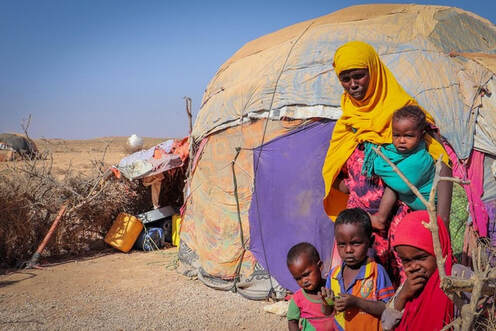
Photo Credit: "Roda was forced to leave her home with her children in search of food and water when drought in Somaliland (Somalia) killed her goats". NRC - 2018

Conflicts, disasters and poverty are among the reasons thousands of people flee their homes every year. While, over the past ten years, international attention has focused on cross-border movements, the number of people living in internal displacement - at 41.3 million[i]- is nearly double the number of refugees.[ii]

Internal displacement comes at colossal, long-term human and financial cost. Indeed, internally displaced persons (IDPs) are considered among the most vulnerable people in the world, unable to exert their human rights or achieve durable solutions.[iii]Internal displacement also affects IDP’s ability to contribute to the economy while incurring costs for their government and aid providers.[iv]

Preventing internal displacement is therefore crucial, and one would expect governments - who bear the primary responsibility on the matter - to take all the necessary steps to prevent and mitigate internal displacement. While guiding principles do exist, there are no binding international instruments to ensure adequate measures; and governments show varying levels of commitment. 

The launch of the Guiding Principles on Internal Displacement in 1998 was a significant step forward and marked the beginning of the recognition of internal displacement. In fact, the majority of the 28 laws and 56 policies recorded globally in the Global Database on IDP Laws and Policies developed by the Global Protection Cluster[v]at the end of 2018 were developed following the publication of the Guiding Principles. Yet, those frameworks are not necessarily adopted where they are most needed. Syria had 6,119,000 IDPs in 2018[vi]but does not have a framework addressing internal displacement. India is regularly hit by disasters, yet its National Disaster Management Plan does not refer to internal displacement. 

Moreover, political frameworks tend to limit their ambitions to the provision of assistance to IDPs and the creation of the conditions for durable solutions, thus focusing on mitigating the consequences of internal displacement rather than addressing its root causes. The importance of those frameworks cannot, however, be overlooked, for they are key to the fulfilment of IDPs’ rights. The existence of policy frameworks and the efforts deployed to develop and implement them are also indicators of a government’s political will to address internal displacement.

Implementation remains a challenge and can be hampered by a lack of financial and technical capacities, the absence of political momentum and inaccurate data. The discrepancies between the existence of IDP policies and laws and the number of IDPs in protracted situations suggest that this is often the case.  For instance, Yemen adopted a comprehensive National Policy for Addressing Internal Displacement in 2013. The framework aims to prevent internal displacement associated with disasters and conflicts and to promote durable solutions, but does not have a clear financing plan. Yet, at 2,324,000,[vii]the number of IDPs in Yemen represents 8 percent of the country’s population, steadily pushed towards a protracted situation. Yemen is not an isolated case and a significant fraction of the countries which have adopted comprehensive frameworks do not have adequate financing and implementation plans, or the necessary capacity and political will.

Alternatively, the reason policy frameworks may fail to prevent and respond to internal displacement could lie in the fact that there is a need for a more comprehensive approach, which goes beyond a focus on triggers to address root causes. Conflicts and disasters are mere triggers of displacement. Indeed, research conducted by the Internal Displacement Monitoring Centre[viii]highlights that displacement results from a combination of accumulated vulnerabilities, such as difficult socio-economic conditions, poor governance, inadequate infrastructure or inappropriate environmental management, themselves causing the event that ultimately pushes people to flee. This is particularly true in instances of natural hazards, for the development of disaster risk reduction policies, combined with appropriate investment in hazard-resistant infrastructure, could reduce people’s vulnerability to climatic events and, by extension, their need to flee in case of disaster. The causality is not as clear in the case of conflicts, which often result from more complex dynamics. However, addressing land issues, poverty and political stability could contribute to reducing risks. 

Because of the complexity of its causes and triggers, internal displacement cannot always be avoided. Nonetheless, preventive measures and a comprehensive approach encompassing human development, economic vulnerability, environmental sustainability and political stability can contribute to mitigating its scale. To achieve this, internal displacement should be mainstreamed in national development plans, poverty reduction strategies and disaster risk reduction plans.[ix]Global initiatives such as the Sustainable Development Goals, which have targets for human development, environmental sustainability and refer to internal displacement, can also contribute towards this without adding pressure on governments. 

The international community should push for the adoption of binding instruments reaffirming the rights of IDPs at the regional and global levels. The Kampala Convention – first legal binding instrument addressing internal displacement – has proven to be a good leverage for advocacy and policy development. Such frameworks must of course be domesticated into national policies or mainstreamed into existing frameworks and reform agendas in order to meet local realities. In fact, mainstreaming internal displacement in all sectors would allow for the comprehensive approach necessary for its prevention. It would also facilitate implementation, for focal points and financing mechanisms would already be in place.

The existence of frameworks, however, means very little without the adequate implementing capacity. It is therefore crucial for key players in the sector to help governments reinforce their conceptual understanding of internal displacement, design monitoring tools and strengthen their response capacities. Donors should put internal displacement higher in their priorities and avail resources for technical capacity reinforcement. The challenges are significant and the means to address and respond to internal displacement should be proportional to the amplitude of the crisis.

Notes/References

[i]This figure refers to the number of IDPs displaced by conflict as of the end of 2018.

[ii]IDMC, Global Report on International Displacement 2019, 2019.

[iii]Durable solutions mark the end of internal displacement and consist in three options: voluntary repatriation, local integration and resettlement. When durable solutions are achieved, assistance and protection needs, as well as potential violations of human rights associated with displacement do no longer exist.

[iv]IDMC, Unveiling the cost of internal displacement, February 2019.

[v]Global Protection Cluster, Global Database on IDP Laws and Policies

[vi]IDMC, Global Report on International Displacement 2019, 2019. 

[vii]IDMC, Global Report on International Displacement 2019, 2019. 

[viii]IDMC, Global Report on Internal Displacement 2018, 2018.

[ix]IDMC, Global Report on Internal Displacement 2018, 2018.


0 Comments

Time to Hand Back the Keys

4/7/2018

0 Comments

 
In the wake of celebrations to mark Territory Day 2018, guest contributor Hugh Tillity offers a controversial perspective on self-government in Australia's Northern Territory, suggesting it is time to 'hand back the keys' to Canberra.
Picture


​


​
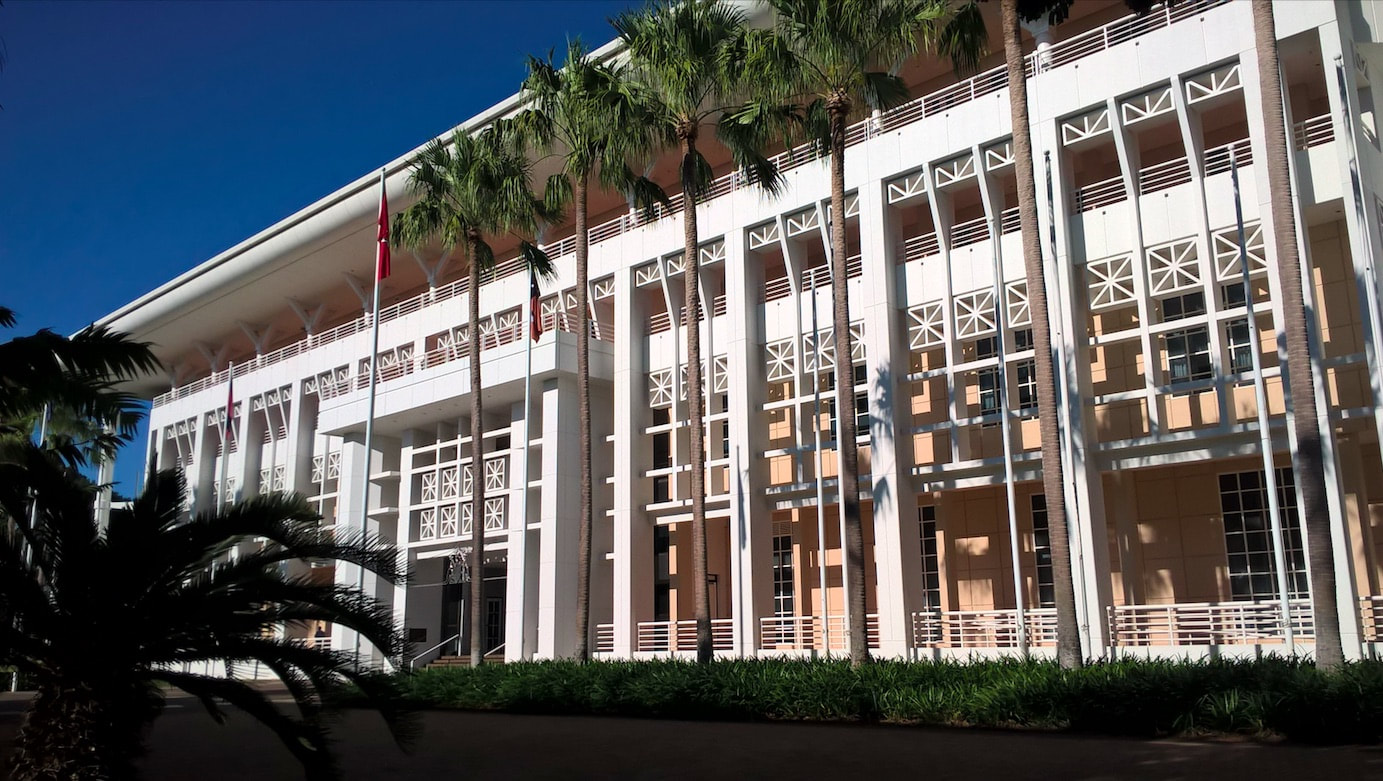
The parliament among the palms: Nerve-centre of a functioning administration, or monument               to a failed experiment?                                           

It’s seven o’clock in the evening on Territory Day 2018. Today is the fortieth anniversary of self-government in the Northern Territory and the good people of Darwin are celebrating by setting fire to things.

Bungers are exploding all around. Children scream and dogs bark as fire trucks roll through suburban streets extinguishing spot fires started by the crackers.  The dedicated professionals in the Emergency Department at Royal Darwin Hospital prepare for a long night and wonder just how extensive the casualty list will be this year.  

Is today the day when a child is so badly hurt that the NT Government will have no alternative other than to ban the infantile practice of exploding fireworks? There is a good reason that this action has been taken long ago in the more mature and sophisticated jurisdictions to the south. 

The smell of gunpowder hangs heavy in the air, along with a lingering feeling that self-government in the Territory has failed. It may well be time to ‘hand back the keys’.

In Canberra, where roundabouts are plentiful and shops hard to find, there are bucketsful of capable administrators who are unimpeded by four-year electoral cycles.  They have no truck with absurdly romantic notions of Territorians as croc-hunting, frontier dwellers. Nor do they pine for the silver bullet – be it space-base, waterpark, or super-sized crocodile, constructed entirely of empty VB cans – which will put the economy back on its feet.

They are middle-class, middle-aged men in grey suits who work dispassionately – if unimaginatively - through the problems and come up with the best available solution. Men without advertising spiels.  Men without extravagant dreams of unimaginable prosperity for the denizens of the Gateway to Asia. Men who just do a job. 

And in the Territory, we need people to just do a job. No more pandering to pipe-dreams. We need an end to the desperate desire for dramatic development. We can’t eat hyperbole. We need less reaching for the stars and more balancing of the books.  

Like the original settlers at Port Essington we’ve struggled hard and unearthed a few good performers along the way. But like those same pioneers, we too must admit defeat and come to terms with the fact that the venture has gone belly-up.  There is no shame in making a strategic retreat once one’s best efforts have proven inadequate. But to blunder on indefinitely is the political equivalent of trading insolvent.

A bright young woman with impressive educational qualifications was recently promoted into the NT cabinet. She has been a very good teacher - though not a principal - in the bush.  Her new job is to manage an education department with a billion-dollar budget and four thousand staff. Reflecting on the lack of managerial experience of this new minister, our American cousins may well call this a ‘sub-optimal’ approach to government.
 
There is a school of thought which has it that here in the Deep North the administration of education is essentially the province of bureaucrats – that all the money is already earmarked to pay the salaries of teachers and public servants, so it doesn’t much matter what the minister does.    

Not so. The single greatest problem facing the NT is the failure of Aboriginal children to get a good education. They don’t go to school, they don’t learn, they don’t pass exams, and consequently they don’t enjoy the same life choices as their non-Indigenous contemporaries. The vicious circle lies unbroken.

Education policy is our most pressing problem, and our finest minds must be tasked with finding a solution. The young woman mentioned above may well be one of these minds. In a larger jurisdiction she would be nurtured rather than thrown to the wolves.    

This is not a party-political matter. The limitations of our tiny population, and the tyranny of distance confront governments of both political persuasions equally. Successive administrations have lost control of the Territory budget as the deficit heads for the stratosphere.  Interest payments on our massive and ever-growing debt hang like a millstone around the neck of an economy whose time is at hand. 

The Territory’s former Chief Commissioner of Police has new accommodations at the Darwin Correctional Centre where he is serving a gaol sentence for perverting the course of justice. High rates of assaults and burglaries are an indication that all is not well in a community. But the corruption of a society’s systems and institutions is portent of mortal danger.

In Darwin, our economy lies bedraggled and beaten, mugged once again by the harsh reality of the boom-bust cycle of resource-based investments. Retail in the city lies in tatters, as itinerants beat out the death-march on improvised percussion instruments. Property prices plummet, in lock-step with business confidence.  The Inpex party lasted for five years – as stated on the invitations - and we all had a good time. But the party is over now and the only thing on the horizon is thunderheads.

The NT’s own-source revenue struggles towards a pitiful 30%. We are kept afloat only by GST money showered on us in abundance by a generous commonwealth. The NT - with 1% of Australia’s population - receives 4.7% of the nation’s GST distribution. Good thing too. 

It’s time for us to swallow our pride and beg Canberra to ride to the rescue. It’s time for us to beckon the grey-suited men. It’s time for us to offer contrite apologies for our profligacy, tug on our respective forelocks, and hand back the keys. 

0 Comments

SSD's Universal Access Project in Papua New Guinea Featured in PNG National

14/5/2018

0 Comments

 
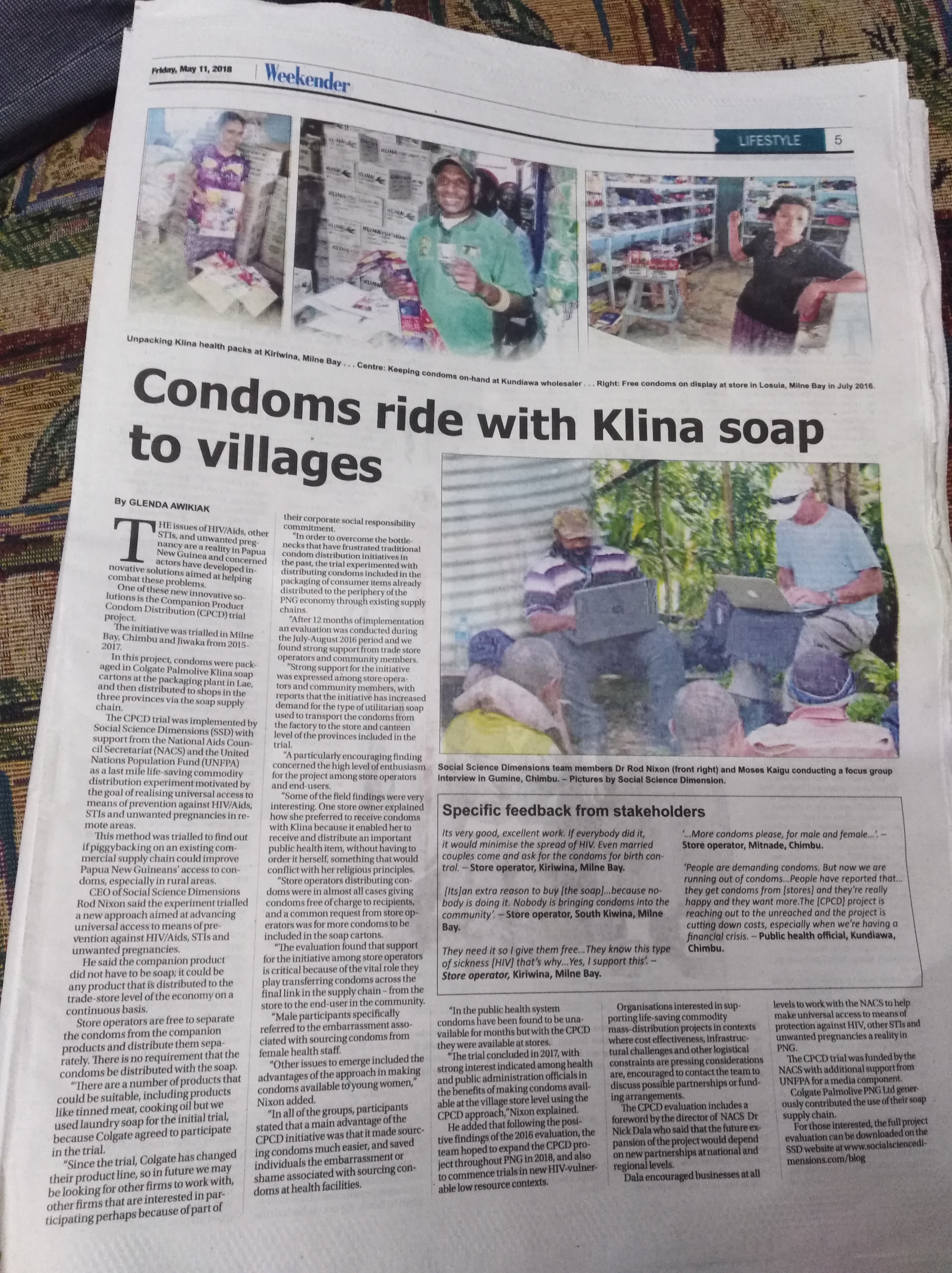
We are really pleased that the Papua New Guinea National newspaper decided to feature our PNG Companion Product Condom Distribution (CPCD) project in their weekend edition, published 11 May 2018 (p.5).
​
​A readable image of the printed edition (you need to click on the link) is pasted below. An online version, which includes less detail, can be accessed here.   

Thanks to Glenda Awikiak and the team at the PNG National for this feature!
Picture
0 Comments

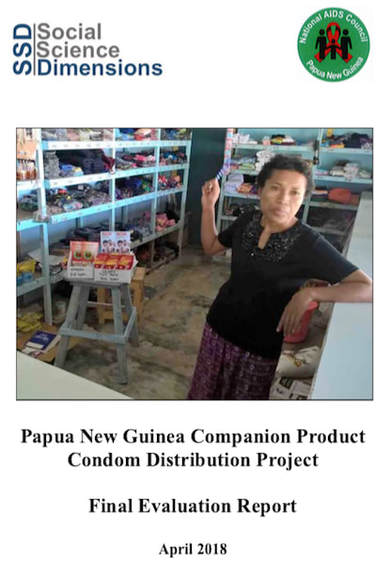
Evaluation of PNG Companion Product Condom Distribution (CPCD) Trial Now Available Online

24/4/2018

0 Comments

 
Picture
We are delighted to present the Final Evaluation of the Papua New Guinea Companion Product Condom Distribution (CPCD) trial, which includes a Foreword by the newly appointed Director of the PNG National AIDS Council Secretariat (NACS), Dr Nick Dala. 

​The CPCD project trialled the distribution of condoms included in the packaging of companion products (soap) as a strategy for overcoming logistical challenges associated with the distribution of condoms in rural PNG. Specifically, the project distributed condoms in the packaging of a utilitarian line of soap produced locally by Colgate Palmolive, thereby piggybacking on an existing supply chain in order to efficiently transfer condoms to the village-store level of the PNG economy. The trial  operated in the provinces of Milne Bay, Simbu and Jiwaka.
 
Following the encouraging results of an initial Pre-Trial Pilot Study undertaken in 2013, the live trial commenced in April 2015, after the preparation of a range of BCE materials including awareness posters, television and radio segments featuring kickboxing identity Stanley Nandex. 

The CPCD trial ended up running into 2017, with the  fieldwork informing the evaluation posted on this page taking place in the July-August 2016 period. The evaluation is being released now following the recent appointment of Dr Nick Dala as Director of NACS, after an extended period during which NACS was without a Director. 

In his Forward to the Evaluation, Dr Dala (formerly PNG National Department of Health STI/HIV Manager) notes that the trial has 'demonstrated proof of concept', as well as ways 'in which the CPCD approach can be improved'. Dr Dala observes that 'the future expansion of the CPCD project will depend on new partnerships both at national and regional levels', and encourages 'businesses at all levels' to work with PNG health authorities to 'help make universal access to means of protection against HIV, other STIs and unwanted pregnancies a reality in PNG'.

We join Dr Dala in thanking Colgate Palmolive for participating in the initial trial, and also to the United Nations Population Fund (UNFPA) for their support of the media element and NACS itself for supporting the coordination, monitoring and evaluation of the trial.  

final_cpcd_evaluation_[april_2018].pdf
File Size: 1226 kb
File Type: pdf
Download File

0 Comments

SSD Blog a Facebook Free Zone

21/3/2018

1 Comment

 
Due to the popularity of Facebook, we've vacillated on this one for some time. Recent developments, however, have inspired us to take a position on the issue.
Picture
1 Comment

In the National Interest

12/10/2017

0 Comments

 
Picture
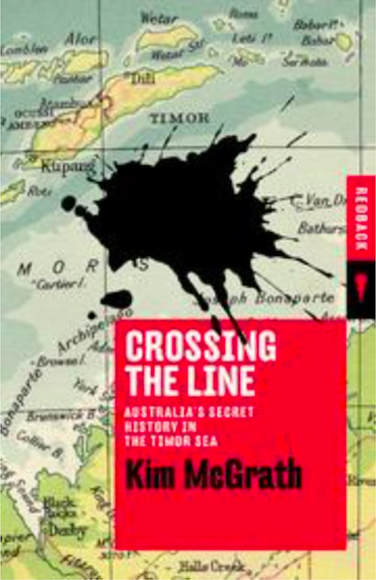
Graham Ring reviews Kim McGrath’s new book, Crossing the Line: Australia's Secret History in the Timor Sea

There is only one photograph in Kim McGrath’s new book, Crossing the Line. It’s an infamous 1989 shot of Australia’s then foreign minister Gareth Evans and his Indonesian counterpart Ali Alatas, drinking champagne in a jet over the Timor Sea. They had just signed the Timor Gap Treaty, purporting to divide the gas and oil revenue in the rich fields located off the south coast of Indonesian-occupied East Timor. The author describes it as ‘one of the most ill-conceived media events in Australian political history’. 

Crossing the Line is a forensic account of negotiations around the ‘Timor Gap’ area off the coast of East Timor - the last part of Australia’s enormous maritime boundary still to be settled. The author has made a painstaking search of the Australian Archives and relies significantly on the Australian Government’s own documents for her source material.

She reminds us that at 2 am on Sunday 7 December 1975, Indonesian naval vessels shelled areas east and west of Portuguese Timor’s capital of Dili.  Hundreds of Indonesian paratroopers dropped from the sky over Dili and carnage ensued.  The population of the country fell from 650,000 to less than 500,000 in the years following the invasion –significantly a result of killings by Indonesian soldiers, and famine imposed as a political weapon.

​This grim history is well-known, but the focus of McGrath’s fluent 200-page paperback, is the attitude taken by successive Australian governments to the invasion of East Timor - and its subsequent quarter-century occupation by Indonesian forces.  It’s an uncomfortable read for Australians as the author chronicles the actions taken – and not taken - in the name of ‘Australia’s national interest’. 

It’s abundantly clear that Gough Whitlam was aware of the impending Indonesian invasion in the months before his own demise in 1975. His government acquiesced because of an assumed political stability which an Indonesian-ruled East Timor would bring to the region.  The rogues’ gallery who succeeded Whitlam – Fraser, Hawke, Keating and Howard – acquiesced in turn, for an even more unsavoury reason. A compliant Indonesian Government would offer favourable Timor Gap terms, generating billions of dollars of gas and oil revenue for Australia. In the national interest.

It’s safe to assume that - in the absence of huge prospective revenues from the gas fields -the Australian Government would have joined the great majority of nations in condemning the Indonesian invasion. It also seems likely that – in the circumstances where projected revenues numbered in the millions of dollars rather than billions of dollars - the result would have been the same. This begs the ugly but inescapable conclusion that a macabre calculation was done by Australian politicians and bureaucrats. This could only have involved offsetting the extent of public outrage about the likely number of executions, rapes, and incidents of torture, against the projected revenue the gas fields were likely to generate for Australia.
 
A strong stomach must be needed to undertake such calculations. But clearly, such cost-benefit assessments of this nature must have been conducted repeatedly in the years following the 1975 invasion, to determine the appropriate course of action. In the national interest.

Given that we live in a representative democracy it seems reasonable that our Government provide its citizens with some detail about the way in which these sums were done. Then we can make a judgement at the ballot box about whether we are getting the kind of government we want. The only alternative would be for Australia to undertake to respond to such circumstances by doing what is morally right, without regard to calculations based on projected resource revenues.
 
Footnote: On 3 September 2017, the Permanent Court of Arbitration in The Hague announced that East Timor and Australia had reached agreement over the disputed territory, however details remain confidential.

Crossing the Line is published by Black Inc. and retails for $22.99
​

0 Comments

​The Decline of the Public Debate

12/10/2017

1 Comment

 
Graham Ring
In the age of the internet we are deluged by huge volumes of information delivered at hitherto undreamt-of speeds. Media outlets are driven by an imperative to report on events literally as they are occurring.  The speed at which everything must happen to make good the promise to be “first at five” makes mistakes inevitable. Little heed is given to context – an explanation of the circumstances surrounding an event – in a world where immediacy is king.  There just isn’t time.

How then are we to triage, analyse, and assess the information flooding over us? One ugly answer is that information has become so transitory and disposable that there is no need to bother. If you don’t like the piece you’re reading don’t worry - another one will be along in a minute. Mr Zuckerberg is refining his algorithms so skilfully you can be certain that opinions reinforcing your existing views are already speeding towards your computer.

Life is busy, and this is a convenient way for us to receive the kind of news and opinions we want. But do we have a duty also to receive the news and opinions that we don’t want? Without doing so, how can we make a thoughtful assessment about a matter? Are we letting other people do our thinking for us?

There is a grim irony that - at a time when information is more available than ever before - the respectful contesting of ideas is in precipitous decline. Apart from an opposable thumb, a rational mind is the thing that elevates us above the beasts. If we choose not to properly inform our rational mind then the consequences are uncomfortable.

I recently attended a forum where a speaker posited that “Indigenous people were under-represented in the Northern Territory Parliament”. He presented no data to establish his contention, nor did he indicate what the appropriate level of representation should be. These convenient oversights absolved him of the need to suggest a method by which this alleged under-representation could be overcome.

Later he would excoriate the NT Government for subsidising the Red Centre Nats car show in Alice Springs, and the AFL football games in Darwin. “What role does the government have in subsidising private undertakings of this kind?” he asked rhetorically.

The cases were both very weak. But neither was contested by an audience comprised of people obviously sympathetic to the two propositions. Today a great deal of our discussion occurs in various echo-chamber environments, where speakers ‘preach to the choir’,  and audiences have their views reinforced in a warmly satisfying way.

Indeed, we should be open to listening to the case for greater representation of Indigenous people in parliament - provided the proponent has established with something beyond bombast that the current level of representation is inadequate.

We should also be open to the argument that it is not effective for the government to subsidise private leisure industries – but not on the basis that this is axiomatically wrong. It’s likely that the NTG thinks that their investment in these sporting events provides a net economic return to the Northern Territory, and perhaps some social good as well.  Anyone who wishes to disagree with the view ought to be welcome to present their data and substantiate their case.

But that’s not the way we do business anymore. What is missing is the respectful contesting of ideas in the public space. The cited example was from a forum traditionally inclined to the left of politics, but this myopic malaise is not confined to either side of the political spectrum.

We subscribe to the media outlets that reflect our world view. We join chat-rooms and mailing lists to that we can receive the sort of material that confirms our pre-determined positions. This is both understandable and worrying. 

Our ideas are rarely questioned. There is little call for positions to be explained or justified. The skills of civility and respectful exchange are fading from atrophy.  Witness the rise of internet trolls, hateful graffiti, and tweets of rant rather than reason. The technical skills of respectful discussion and debate are in dramatic decline.  

We are losing the fundamental politeness of formulations like ‘In my view’ and ‘I believe that’. We frequently fail to listen carefully to someone who holds a contrary view – and to invite them to clarify and elaborate on their position. We no longer possess the wit to identify and expose verbal chicanery.

There is something admirable about individuals displaying absolute loyalty to the policies of their chosen political party. But these devotees who hold the line against any criticism of any policy, ultimately do their party - and the broader community - a dis-service.

Good public policy is generated by robust – but not rancorous – exchange of honestly-held views.  We desperately need to rediscover these skills.
1 Comment

​The Paradox of International Sustainability Standards Schemes in Fragile State Contexts

11/10/2017

0 Comments

 
Picture
Rod Nixon[I]
(Note: This article is available for download as a PDF file by clicking here)​
Introduction.                                                                     
The purpose of International Sustainability Standards Schemes (ISSSs) is to verify that businesses comply with minimum social and environmental standards, no-matter where a product is produced or sourced. ISSSs clearly have potential in low resource or fragile state contexts, where they can substitute for state social and environmental monitoring and regulatory mechanisms that may be absent, poorly resourced, lacking in transparency, or otherwise ineffective. However, logical contradictions come into play when the process of gaining certification with a standards scheme in such a context requires evidence of compliance with state administrative processes that may lack rigour. This situation raises the issue of the extent to which ISSSs should be complicit in reinforcing the authority of public officials in jurisdictions known to be at risk of producing dysfunctional and/or corrupt public administration outcomes. There is a strong argument in such contexts for ISSSs to minimise reliance on compliance with the requirements of public sector agencies and utilise alternative means of verification wherever possible.
 
What are International Sustainability Standards Schemes (ISSSs)
ISSSs exist for the purpose of assuring consumers, regulators, and other interested parties that particular goods and services have been produced in compliance with minimum environmental and social standards. The origins of ISSSs lie in the increasing social and environmental awareness of recent decades, which have also been reflected in legislative changes in developed countries. Notable among the latter is the 2008 amendment to the (United States) Lacey Act prohibiting the import and trade of fish, wildlife and plant products sourced in violation to laws anywhere.[ii]
 
Broadly, certification schemes are intended to verify that production processes have not involved labour exploitation or the unsustainable management of natural resources, that land has been accessed only with the Free, Prior and Informed Consent (FPIC) of landholders, and that production has occurred in compliance with prevailing laws in the countries of origin (which for reasons outlined below, could perhaps be better thought of, as not illegally).
 
Examples of organisations offering standards certification include the following:
  • Forest Stewardship Council (FSC)
  • Rainforest Alliance Sustainable Agriculture Network (SAN),
  • Round Table on Sustainable Palm Oil (RSPO), and
  • Marine Stewardship Council (MSC), which certifies sustainable fishing activities.
 
Standards schemes are not restricted to primary industries; for example the certification of sustainable tourism ventures is possible through the Global Sustainable Tourism Council (GSTC). ISSSs normally provide certification based on external audit, the objective of which is to determine observance of a range of principles and criteria through verification of compliance with specific indicators (which may include laws). There are also meta-programs that specialise in monitoring and accrediting entire standards schemes to ensure their robustness. These include the International Social and Environmental Accreditation and Labelling Alliance (ISEAL).
 
ISSSs and Fragile State Contexts
ISSSs would appear to have considerable potential for improving public administration outcomes in low resource or fragile state contexts where existing monitoring and regulatory frameworks are weak or non-existent.[iii] In such contexts, certification of commercial operations by ISSSs can ideally contribute to islands of functional public administration in contexts more broadly characterised by administrative variability or neglect. In the process, communities gain exposure to more robust standards, and conceivably may raise their expectations of the performance of both business and government.
 
However, in the event that certification with an international standards scheme requires that an operator demonstrate compliance with the requirements of one or more national government agency in a low resource/fragile state context, then a paradoxical situation may arise. On one hand, if compliance procedures administered by a national government agency are efficient, effective and robust, then the context may not be consistent with the low resource/fragile state typology (potentially meaning that the role of the ISSS in this context is redundant). On the other hand, if compliance procedures administered by a national government agency are not administered robustly (due to indolence, a lack of capacity, resources or transparency, or some combination of factors) then the compliance of the operator with the administrative procedures may serve little or no purpose in assuring adherence to sustainability principles, if indeed the agency even bothers to prepare appropriate documentation.[iv]
 
Perversely, a requirement to achieve documented compliance with a particular administrative procedure administered by a dysfunctional agency, as a requisite for certification with an ISSS, may even incentivise an otherwise bona fide operator to bribe an agency for compliance documentation. This would be contrary to the principles underlying all ISSSs and is a key point given the delays often experienced in low resource/fragile state contexts. In such environments it is not uncommon to experience prolonged delays in dealings with officials assigned legal competence (see Papua New Guinea example discussed below). Very high demands and expectations are commonly placed on any high-performing and responsive individuals who may work in such agencies, and such persons can be feted especially by international organisations. The clear absence of a broader functioning Weberian bureaucracy becomes starkly apparent every time such individuals are relocated or are temporarily absent.
 
Legalities and Realities
Palm oil is produced in equatorial regions, mostly in developing countries, and the industry has its own standards scheme. The Round Table on Sustainable Palm Oil (RSPO) is a non-profit entity involving a range of industry stakeholders, which certifies sustainable palm oil production based on compliance by companies with ‘a set of environmental and social criteria’.[v] In the following paragraphs, criteria relating to legal compliance generally, and land tenure especially, are considered.
 
Beginning with legal compliance broadly, under RSPO Principles and Criteria 2.1 ‘[e]vidence of compliance’ is required ‘with all applicable local, national and ratified international laws and regulations’.[vi] Meanwhile, 2.2 requires that ‘[d]ocuments showing legal ownership or lease, history of land tenure ownership/control, and the actual legal use of the land…’ be available.[vii] At face value such requirements, clearly calculated to ensure that an operator is violating no laws, appear well intended. However, of the 18 ‘Grower certification’ countries listed on the RSPO website (RSPO 2017), only two (Costa Rica and Malaysia) score above the 2016 average score of 43 in the Transparency International (TI) 2016 Corruption Perception Index (TI 2017), which ranks countries from ‘0 (highly corrupt) to 100 (very clean)’. The majority of the RSPO ‘Grower certification’ countries score on or below this ‘global average score’ of 43, which indicates ‘endemic corruption in a country's public sector.’[viii] For this reason, countries scoring 43 or less might be considered ‘higher risk’ jurisdictions, suggesting reason to question the integrity of formal land tenure documentation processes in these countries and the capacity of government agencies generally (although this may vary across agencies).
 
Of the 16 higher risk RSPO ‘Grower certification’ countries, national interpretations (documents outlining how the RSPO standard will be applied in a particular country context) are available on the RSPO website for Columbia, Ghana, Guatemala, Honduras, Indonesia, Papua New Guinea (PNG), Solomon Islands and Thailand. The general legal compliance and land tenure provisions of these documents are similar, although Thailand and Solomon Islands differ from the norm in the number and importance (major or minor status) of land indicators. With the exception of Thailand (which uses different wording), the guidance on ‘laws and regulations’ specifies that ‘Implementing all legal requirements is an essential baseline requirement…’[ix]
 
PNG is alone of the eight higher risk countries in that it features ‘Specific Guidance’ (under 2.2 on land) which expressly recognises performance issues associated with a government agency, noting (emphasis added) that ‘[i]n PNG, the issuance of land titles…can take several years, and has proven an unpredictable process. Cases have been recorded where valid requests have taken over twenty-years to be processed….’ The guidance, outlined below, then specifies a number of measures less reliant on a response from a government agency which, if fulfilled in combination, demonstrate compliance with the land access provisions:
 
'a)  the land has been alienated; 

b)  boundaries have been defined by a registered surveyor and portion 
numbers allocated by the Surveyor General; 

c)  there is no dispute over tenure…; 

d)  there is evidence that an application has been submitted to the 
relevant Government authority (Provincial Division of Lands and 
Physical Planning); and 

e)  there is evidence of follow-up to the authorities on more than one 
occasion.’

 
This particular ‘specific guidance’ is a recent addition to the PNG RSPO national interpretation, and it is clearly aimed at particular cases involving undisputed parcels of land previously alienated from customary tenure (almost certainly during the colonial period) over which ‘boundaries have been defined by a registered surveyor and portion 
numbers allocated by the Surveyor General’. The reference to ‘evidence of follow-up to the authorities on more than one occasion’ is a refreshingly frank reference to the sub-optimal outcomes and lack of responsiveness frequently associated with attempts to communicate with government agencies in higher risk jurisdictions for the purpose of advancing matters in accordance with due process. The reality is that in any jurisdiction characterised by endemic corruption, a single competent agency may, depending on the commitment to transparent and efficient service of the incumbent staff, as well as other fickle aspects including the status of fuel allowances, vehicle availability, printer ink, telephone lines, etc., be capable of furnishing compliance-related documentation promptly, within weeks, in 20 years, or at no foreseeable time. For ISSSs, the probability of corruption and other forms of administrative dysfunction in higher risk jurisdictions begs the question of whether the identification of indicators less dependent on action by government agencies should be prioritised broadly in relation to higher risk contexts, and across all or most criteria (at least as alternatives, if not as indicators of first resort).
 
The expectation that officials in endemically corrupt jurisdictions will operate competently extends to other sustainability standards approaches. The Forest Law Enforcement, Governance and Trade (FLEGT) Voluntary Partnership Agreement (VPA) between the European Union (EU) and the Republic of Liberia (2016 TI score 37), for example, charges the Liberian police with checking ‘that all loads passing checkpoints have the required waybills with them’. Already skilled at checking for fire extinguishes, safety triangles, working headlights, etc., as a basis for extorting drivers unfortunate enough to have neglected any of these areas, there is no question that Liberian police officers will relish all additional responsibilities.[x] But should international standards programs of any kind be complicit in adding to the authority of public officials already well known for venal and predatory behaviour, or should standards schemes be endeavouring to keep engagements with public sector officials to an absolute minimum at least until such time as public sector performance levels in particular jurisdictions reach minimum standards?
 
Practical Approaches
The land tenure revisions to the PNG RSPO national interpretation demonstrate efforts to facilitate compliance using a more flexible, less legalistic approach; one clearly adopted in recognition of the non-responsiveness of the competent government agency. The requirement that ‘boundaries have been defined by a registered surveyor and portion
numbers allocated by the Surveyor General’ still requires a level of state functionality, but less than previous requirements.
 
Elsewhere, the Marine Stewardship Council (MSC) has taken a more systematic approach to enabling certification of compliance through verification of alternative (non-legalistic) indicators. For example, the ‘Governance and policy’ component of the MSC Standard Principle 3 on Management Systems refers to the requirement for a ‘Legal and/or customary framework’ for ensuring the sustainability of fisheries that is ‘appropriate and effective’. Although the specific indicators included in the ‘Governance and policy’ section refer primarily to the existence of a ‘national legal system’ meeting minimum standards, the general guidance on Principle 3 (under SA4.1.4) implies that assessment teams are not limited to state laws provided they provide sufficient evidence concerning the effectiveness of alternative management systems (MSC 2014:65):
 
‘When scores are based on the consideration of informal or traditional management systems, the team shall provide, in the rationale, evidence demonstrating the validity and robustness of the conclusions by:
a.     Using different methods to collect information.
b.     Cross checking opinions and views from different segments of the stakeholder community.'
 
The regard for ‘traditional or informal management systems’ in the MSC Standard is certainly not without precedent in sustainability initiatives. For example, the US Lacey Act (2008) also refers to the authority of ‘Indian Tribal Law’ in areas of US jurisdiction, in relation to dealings in fish, wildlife and plants.
 
ISSSs in an Imperfect World
Writing on the burgeoning number of new states in the second half of the 20th Century, post-Empire, historian Niall Ferguson (2004:372-373) remarks that ‘…many…are tiny. No fewer than fifty-eight…have populations less than 2.5 million; thirty-five have less than 500,000 inhabitants’. Noting the ‘economic disruption’ inherent in the fact that many small countries, post-1945, originated out of ‘civil war within an earlier multi-ethnic polity’ Ferguson remarks that such countries ‘can be economically inefficient even in peacetime, too small to justify all the paraphernalia of statehood they insist on decking themselves out in: border posts, bureaucracies and the rest’. Moreover, it is not just small states that struggle to achieve quality public administration outcomes. Realising effective and transparent public administration remains a challenge facing a great number of countries, and Transparency International reported in the their 2016 Corruption Perception Index report (TI 2017) that ‘[m]ore countries declined than improved…’.
 
Assuming that the realisation of effective and transparent public administration remains a medium-to-long term project across a host of nations in the developing world, ISSSs can a play an important role in advancing robust social and environmental monitoring and regulation systems in places that currently lack it. ISSSs might increase their workability in fragile state/low resource contexts by keeping the need for national agency compliance documentation to an absolute minimum, increasing recognition of bona fide attempts by operators to comply with state law even in the absence of cooperation and responsiveness on the part of state agencies, and expanding the option of greater consultation with traditional authorities/village leaders, civil society actors, and community members as a basis for measuring compliance.
 
Conclusion
International Sustainability Standards Systems (ISSS) hold potential as a means of ensuring that businesses comply with minimum social and environmental standards in low resource/fragile state contexts. Arguably it is in these contexts where ISSSs can make the greatest contribution. There is, however, an inherent contradiction in requiring compliance documentation from poorly resourced government agencies in high risk jurisdictions, and a possibility that such requirements will actively encourage otherwise bona fide business operators to bribe civil servants for documentation that might otherwise not be forthcoming. For this reason, it is important for ISSSs to keep requirements for national agency compliance documentation to an absolute minimum, as well as to recognise bona fide attempts by operators to comply with state law even in the absence of any response by the agency concerned, and expand options for consultation with traditional authorities/village leaders and community members as a basis for measuring compliance.
 
 
References
DNSS (Donor Network on Sustainability Standards). N.D. ‘Standards Systems as Effective Tools to Promote Sustainable Development – Opportunities for Governments’ Involvement’. Draft policy brief produced by the DNSS partnership involving the Swiss State Secretariat for Economic Affairs (SECO) and German GIZ (Gesellschaft für Internationale Zusammenarbeit or Society for International Cooperation).

Ferguson, Niall. 2004. Empire: How Britain made the Modern World. Penguin: London.
 
MSC (Marine Stewardship Council). ‘MSC Fisheries Standard and Guidance v2.0…’. MSC document dated 1 October 2014. Sighted 11 March 2017 at https://www.msc.org/documents/scheme-documents/fisheries-certification-scheme-documents/fisheries-standard-version-2.0 
 
RSPO (Round Table on Sustainable Palm Oil). 2017. ‘Certified Growers’ (list dated 28 February 2017). Sighted at http://www.rspo.org/certification/certified-growers 11 March 2017.
 
- 2016a. ‘RSPO Principles and Criteria for Sustainable Palm Oil Production: Papua New Guinea National Interpretation...’ PNG RSPO national interpretation document dated 21 March 2016. Sighted at https://www.rspo.org/key-documents/certification/rspo-national-interpretations 10 March 2017.
 
- 2016b. ‘Columbian National Interpretation of the RSPO 2013 Principles and Criteria…’ Columbian RSPO national interpretation document dated September 2016. Sighted at https://www.rspo.org/key-documents/certification/rspo-national-interpretations 10 March 2017.
 
- 2015a. ‘National Interpretation of the …RSPO Principles and Criteria of the Republic of Honduras…’ Honduras RSPO national interpretation document dated July 2015. Sighted at https://www.rspo.org/key-documents/certification/rspo-national-interpretations 10 March 2017.
 
- 2015b. ‘RSPO Principles and Criteria for Sustainable Palm Oil Production: Papua New Guinea National Interpretation...’ PNG RSPO national interpretation document dated 7 August 2015. Author’s collection.
 
- 2015c. ‘Ghana National Interpretation of RSPO Principles and Criteria…’ Ghana RSPO national interpretation document dated September 2016. Sighted at https://www.rspo.org/key-documents/certification/rspo-national-interpretations 10 March 2017.
 
- 2015d. ‘National Interpretation of …RSPO Principles and Criteria of the Republic of Guatemala …’ Guatemala RSPO national interpretation document dated December 2015. Sighted at https://www.rspo.org/key-documents/certification/rspo-national-interpretations 10 March 2017.
 
- 2013. ‘Indonesian National Interpretation of RSPO Principles and Criteria …’ Indonesian national interpretation document dated July 2013. Sighted at https://www.rspo.org/key-documents/certification/rspo-national-interpretations 10 March 2017.
 
- 2011. ‘Roundtable on Sustainable Palm Oil (RSPO) Principles and Criteria for Thailand...’ Thailand RSPO national interpretation document dated June 2011. Sighted at https://www.rspo.org/key-documents/certification/rspo-national-interpretations 10 March 2017.
 
- 2010. ‘National Interpretation of RSPO Principles and Criteria for Sustainable Palm Oil Production: Independent State of Solomon Islands.’ Solomon Islands RSPO national interpretation working group document dated August 2010. Sighted at https://www.rspo.org/key-documents/certification/rspo-national-interpretations 10 March 2017.
 
TI (Transparency International). 2016. ‘Corruption Perception Index 2016’ (released 25 January 2017). Sighted at http://www.transparency.org/news/feature/corruption_perceptions_index_2016 11 March 2017.
 
- 2015. ‘People and Corruption: Africa Survey 2015.’ TI survey released December 2015 sighted at http://www.corruptionwatch.org.za/wp-content/uploads/2015/12/Africa-survey-2015-Global-Corruption-Barometer.pdf 15 March 2017.
 
US Congress. 2008. 18 USC 42-43 16 USC 3371-3378 Lacey Act. Sighted at https://www.fws.gov/international/laws-treaties-agreements/us-conservation-laws/lacey-act.html 9 March 2017.
 
US Department of Agriculture. 2016. See ‘Lacey Act: Frequently Asked Questions…’. US Department of Agriculture document dated 28 April 2016, sighted at https://www.aphis.usda.gov/plant_health/lacey_act/downloads/faq.pdf 9 March 2017.

Notes
[i] The author is grateful to Shane Cave, Ben Nixon, Yemi Oloruntuyi, Dr Howard Rogers and Graham Ring for comments on an earlier draft of this paper. Any errors, inaccuracies and omissions are the responsibility of the author alone.

[ii] Note that the ‘Prohibited Acts’ section of the legislation refers to ‘violation of any foreign law’ in relation to ‘fish or wildlife’, but not in relation to plants. Notwithstanding this feature, the Act is also taken to apply to plants, as per US Department of Agriculture (2016) guidance that the 2008 revisions to the Lacey Act make it ‘unlawful to import, export, transport, sell, receive, acquire, or purchase in interstate or foreign commerce any plant, with some limited exceptions, taken, possessed, transported or sold in violation of the laws of the United States, a State, an Indian tribe, or any foreign law that protects plants or that regulates certain plant related offenses….’.

[iii] The utility of ISSSs in developing country contexts has received donor attention, including in a Policy Note prepared by the Swiss-German Donor Network on Sustainability Standards (DNSS). According to the Network (DNSS N.D.:1) group that has considered the potential of ISSSs, these schemes were ‘were originally developed as a substitute for lacking international regulation and ineffective mechanisms for the enforcement of national legislation’.

[iv] Note that in the case of the MSC, the standard requires first that management exists, that management stipulates processes and procedures to ensure sustainability and that there is monitoring and control to ensure compliance with managements objectives.  Accordingly there is not just an evaluation of compliance with management, but also an evaluation of management, the objectives set by management and ability of management to enforce compliance. 

[v]  See http://www.rspo.org/about

[vi] Based on reference to the RSPO ‘national interpretation’ documents for Columbia, Ghana, Guatemala, Honduras, Indonesia, Thailand, Papua New Guinea and Solomon Islands. See, respectively, RSPO (2016b), RSPO (2015c), RSPO (2015d), RSPO (2015a), RSPO (2013), RSPO (2011), RSPO (2016a), and RSPO (2010).

[vii]Other areas of ‘relevant legislation’ referred to include labour, agriculture, environmental management, storage, transportation and processing.

[viii] Of the remaining 16 RSPO grower certification countries, Ghana scores 43, Solomon Islands 42, Brazil 40, Columbia and Indonesia 37, Gabon and Thailand 35, Ivory Coast 34, Equador 31, Honduras 30, Guatemala and Papua New Guinea (PNG) 28, and Cambodia 21.

[ix]  National interpretation information is available at http://www.rspo.org/key-documents

[x] A 2015 TI Africa survey (TI 2015: 14,35) found that 69% of Liberian public service users reported paying a bribe in the last 12 months, the highest rate of any country surveyed. Meanwhile, 77% of respondents surveyed believed that ‘most’ or ‘all’ Liberian police officers are corrupt. 


0 Comments

Just Desserts

6/3/2017

0 Comments

 
Graham Ring continues his critique of Australian Politics, this time addressing the issue of leadership.

There is an old adage in politics that says we get the politicians we deserve. If this is so then we are a nation of lightweights. Australian politics has plummeted so deeply into the trough of blandness there appears to be no way out. Focus groups are consulted, polls are commissioned and politicians pontificate with pre-tested formulations designed to maximise wriggle room.

Prime Minister Turnbull is cowed by his party’s right-wing hardliners, unable to lay to rest the last vestiges of the Member for Warringah’s prime ministerial ambitions. Every so often Turnbull throws the switch to vaudeville in his unhappy attempts to placate this constituency. His recent parliamentary ‘demolition’ of Shorten as a hypocrite and rank opportunist cheered his nervous backbenchers for a minute or two. It also briefly brightened things for poor sods like me, who have the time and disposition to take a day-to-day interest in the B-grade theatre that is the Australian Parliament. But the rest of the country was busy taking their kids to soccer practice, tucking into Big Macs and watching reruns of Dating Naked. They didn’t even notice.

A symptom of Turnbull’s malaise is that he finds himself hopelessly wedged on the question of same sex marriage. This would be a popular reform and has Turnbull’s personal support. Bringing on a vote in parliament might just see Turnbull regain some initiative. The prevaricating PM needs to take on his recalcitrant right and establish some sort of legacy. To crash through or crash as E G Whitlam might have said. Politicians can only be wedged when they try to play both sides of the street. Were they to make a firm decision on an issue, and have the courage of their convictions by explaining and advocating for the position, there could be no wedge. This is a hallmark of leadership. And frankly, Turnbull hasn’t got much to beat.

Bill Shorten’s confected outrage at every turn is lame. His tedious trickery on the Fair Work Commission’s penalty rates decision is a case in point. Better that Shorten was six seats short of a majority than two. Then he might abandon the short-term skirmishing for serious policy development work, and prepare to make his case to the country two years hence.  Before the Labor leadership position was filled, the party had a vote of its members to discover who they wanted as leader.  “Give us Albo” they chanted, before reality set-in and the matter was decided by caucus members remembering which side their bread was buttered on, and whose support they needed to gain advancement.  It’s notable that - bruised and battered as he is - a tottering Turnbull still enjoys significantly greater public support than the leader of the opposition. There is much work to be done.

Those who know about these things say that Australia’s taxation system is in a lot of trouble. The boffins say that changes need to be made as a matter of urgency if governments are to continue to raise the revenue needed to fund our health and education systems.  The Henry Tax review was designed to undertake a ‘root and branch’ review of the taxation system and make recommendations to steer the ship of state into safer waters for the next twenty years of the voyage

This report – the product of a substantial investment of public funds - was handed to Prime Minister Rudd in 2008. Rudd promptly placed the report in a drawer where it has remained ever since, ignored by governments of both political persuasions, because implementation would have required skill and courage.  Disaffection is the new black in politics across the world. Internationally it’s Trump and Brexit, locally it’s Hanson and Bernardi. There is much to be disaffected about.

Politicians no longer have the courage to deliver bad news when there is a vaguely viable option to do anything else. It is now unimaginable that a political leader might say that the country needs to have a mature debate about raising taxes or cutting services. Their opponent will start squawking about ‘’big new taxes’’, whereupon the issue will be consigned to the too-hard basket, even as the magnitude of the problem continues to escalate. Public consultation has its virtues, but ultimately decisions must be made and responsibility for these decisions accepted. That is leadership.

Should you, dear reader, ever have the doubtful privilege of taking part in a focus group or responding to a poll, you may wish to suggest that politicians place too much store in the opinions of people who take part in focus groups or respond to polls. That is not leadership.

Graham Ring is a Darwin based writer and journalist.
0 Comments

​Mind over Matter

7/2/2017

0 Comments

 
'Backflipping' or responding to changed circumstances? Graham Ring takes a look at Australian politics, and the media and opposition obsession with 'gotcha moments'. 
​As a seven year old I was very keen on a breakfast cereal called Sugar Frosties. They were corn flakes doused in as much sugar as could possibly adhere to a flake of cereal. But my palate and I have both aged considerably since then. Now I find the idea of eating Sugar Frosties to be revolting.

​I had changed my mind. There were two reasons. In a nation where obesity is the new normal, I had a growing awareness that doing little exercise while consuming refined sugar by the truckload was likely to have ugly consequences. But more importantly, I simply lost my childish taste for sickly sweet things. I have not been condemned for my revisionist position on Sugar Frosties.

​The ability to change our mind (and the dexterity offered by the opposable thumb) are two things that we humans really have going for us.  But let’s put our digital dexterity aside for the moment and focus on our capacity to change our minds – or more generally, to reason.

After new evidence emerges on an issue, or after circumstances change, it may be entirely appropriate for us to re-assess our view about a matter.  It may even be that after deep consideration about existing evidence, we genuinely decide to change our position. This is sometimes thought to be a brave and sophisticated course of action.

Unless you are a politician.  Elected leaders who change their mind are ‘backflipping’, and in doing so demonstrating that they are unworthy, conniving souls, unfit for public office. Mind you, I’m not advocating ‘doing a Derryn’.  Senator Hinch’s recent performance in adopting four different positions on the backpacker tax in the space of four days did little to inspire confidence in his ability, or in the ability of politicians more generally.

It is unnerving – and wrong - for politicians to change their minds frequently without substantiating each new position.  We are entitled to expect our elected representatives to have the courage of their convictions, and to stand up for their beliefs, even when opinion polls and focus groups run against them.

Australian politics is plagued by ‘gotcha moments’ where politicians are seen to be caught out in a direct contradiction with something they had said earlier. This is the favoured terrain both of current affairs reporters and opposition members participating in parliamentary question time. In both cases the objective is to throw damning quotes in the faces of ministers as evidence of their infidelity: ‘Minister you said yesterday that you prefer coffee to tea. I now seek leave to table an interview from Style Magazine in 1977 when you stated explicitly that you were a tea-drinker by choice. Minister this demonstrates beyond all doubt that you are a lying, deceiving scoundrel who cannot be trusted about anything.  You must now make a full public apology, resign your office immediately and return all of your salary to consolidated revenue.’
​
There are less trivial examples. A recently elected prime minister’s assurance that ‘there will be no new taxes in my first year of government’ may need to be revisited if revenues from other sources unexpectedly dry up. A genuine and significant change in circumstance may demand a different response for the well-being of the country. We should applaud rather than upbraid leaders who respond skilfully to changed circumstances. That said, politicians should be wary of making blanket promises.

To change one’s mind on occasion, after thoughtful consideration of evidence old and new, is a mark of courage and intellect. Let’s not discourage it.


Graham Ring is a Darwin based writer and journalist.
0 Comments

By the Dawn's Early Light

20/1/2017

0 Comments

 
Picture
Graham Ring
​Donald Trump has just been inaugurated as the President of the United States of America. This man who has no military or public service background is now the leader of the free world.  He will sit in the round room in the White House for the next four years and make decisions that will have far-reaching implications for the future of the planet.

As a candidate, he presented very much as an ‘outsider’ - a business man who was not of the Washington professional political class. In fact he was disdainful of ‘beltway insiders’ and said that upon taking office he would ‘drain the swamp’  - identifying and dismissing bureaucratic hacks ill- equipped to take America in a new direction. 

Voting in America – and most other parts of the world – is not compulsory. This means that opinion polls and predictions are even less reliable than they are in Australia. In a stunning election result, Trump failed to win the popular vote, but nevertheless garnered enough Electoral College votes to become President.

His campaigning style was one of broad themes, rather than specific policy undertakings. He tapped into a feeling, justified or not, of disaffection with the whole political machine, particularly amongst older white males. His defeated opponent, Hillary Clinton, was the archetypal Washington insider who Trump portrayed as representing everything that was wrong with a moribund political system.  It is widely agreed that his win was significantly the result of the same kind of ‘protest vote’ that saw the remarkable ‘Brexit result in the UK, and the re-emergence of Pauline Hansen as a force on the Australian political scene

The promises and prescriptions Trump offered on the campaign trail were many and varied, but rarely cohesive or well grounded.  At various times he has undertaken to:
  • build a wall with Mexico
  • reduce company tax
  • increase the strength of the military
  • adopt more isolationist foreign policy positions
  • wind back US involvement in free trade agreements
  • stop American-based companies decamping to countries where production costs are lower,
  • embark on a program of huge public infrastructure spending which will cause serious shortness of breath amongst Republican deficit hawks in congress.

Most of all, Trump has said he will ‘Make America Great Again’, - though it seems that when the rubber hits the road the policy prescriptions that will bring this laudable sentiment to fruition are more than a little subjective.

His willingness during the campaign, and subsequently as president-elect, to use Twitter to make his views known has caused more than a little consternation across the nation and around the world.
 
On more than one occasion, Trump has been goaded into intemperate spleen-venting responses on social media after personal attacks. This knee-jerk behaviour calls into question his suitability to conduct international diplomacy at the highest levels.

Picking an untried recruit in a national sporting team in the hope of a narrative of redemption and triumph is intoxicating. Picking an untried recruit to be President of the United States is rather more sobering.

​Who needs Twitter when you’ve got the launch codes?

Graham Ring is a Darwin based writer and journalist.

0 Comments

Services of the Italian Fashion Industry to the History of British Manufacturing

13/1/2017

5 Comments

 
Picture
Rod Nixon
​Congratulations to the Malenotti fashion empire for their services to the history of British manufacturing. In an impressive feat of historical research, the Malenotti dynasty has discovered that the long-defunct British motorcycle manufacturer ‘Matchless’, whose brand they purchased in 2012, was already in the business of producing protective motorcycle clothing in the 1920s. As the born-again ‘Matchless London’ firm states in the ‘Heritage’ section of its website:

'Thanks to the foresight of its enterpreneurs, Matchless was the first motorcycle company to work on rider safety, creating a department of studies where clothing was designed to protect the motorcyclist (clothing was then tested by the best riders of the time).'[1] 
 

This impressive piece of historical research has astonished a number of enthusiasts of the old bikes, who had never previously heard of the endeavours of Matchless in this area, let alone laid their eyes upon any Matchless motorcycle clothing dating from the 1920s or 1930s. Similarly the new historical findings have surprised those interested in the history of motorcycle protective clothing, who’d previously been focused on things like the helmet, in the apparently mistaken belief that it was more important to safety than fashionable leather attire.
 
One of those most surprised by the new historical findings is author Bill Cakebread. Bill worked at the Associated Motor Cycles (AMC) factory that produced Matchless bikes, and has written books on the history of Matchless motorcycles and the Collier family that originally owned Matchless and AMC. Based on research to inform his new book The Matchless Colliers, Bill has had ‘direct contact with the descendants of the Collier family and access to their family archives’. Based on his research, Bill reports '...no record or memory of such clothing whatsoever...'[2] and observes that:


'It is strange that not one member of the Collier family nor any former employee has any knowledge of the Company's involvement in the manufacture, design or promotion of clothing of any kind.  What is known of the protective clothing that they did use, e.g. crash helmets, was that it [was] bought in from outside suppliers.'[3]
 

Similarly, neither the Staffordshire-based Vintage Motor Cycle Club[4] (VMCC) nor the UK National Motorcycle Museum[5] have any records of Matchless motorcycle clothing catalogues in their archives.
 
Obviously, this makes the historical research undertaken by the new owners of the Matchless brand, for uncovering what no one else knew existed, all the more ground-breaking. The ‘Heritage’ section of the Matchless London website (cited above) even includes electronic examples of the extremely rare motorcycle clothing catalogues, dated 1927 and 1928, along with the information that ‘During the same period, Matchless developed a deep know-how of leather clothing, with specialities in clothing for motocycle [sic] racing’. Admittedly from here, the catalogues posted on the website look like nonsensical mock-ups, featuring random photographs (some from decades later) and including no details of actual items for sale or prices. In these parts, though, the ants and cockroaches often get into the electrics, so this could be the problem. 
Picture
You might think the rarity of material and archival evidence supporting the claim to a protective clothing department at Matchless in the 1920s would have caused commentators to pause before elevating the claims of a fashion house to the realm of historical fact. Perhaps, for example, skeptical commentators might have cynically suspected that Matchless London was just inventing some tradition and authenticity that would help them sell overpriced clothing to impressionable, cashed-up fashion victims in places like London and Milan?

Fortunately for British industrial history, no such over-zealous fact-checking has waylaid commentators from the process of setting the record straight. And indeed, why go through the tedious process of visiting a boring, dimly lit, silverfish infested archive (in which you won’t even find the catalogue you’re after) when you can rely on such an august source as the ‘Heritage’ section of a fashion website?
 
Consequently, owing to such modern and efficient data verification approaches, the revised history of Matchless as an early manufacturer of motorcycle protective clothing has already been endorsed, confirmed and enshrined across a range of sources ranging from online motorcycling[6] and fashion[7] sites to a Routledge publication on ‘Sport in History’.[8]
 
Full marks to the Malenotti history team for achieving public recognition of the glorious sartorial truth about the hallowed Matchless brand, in the face of such a scarcity of evidence. 

                                                                                                                       
Notes
[1] Sighted 6 January 2017 at http://www.matchlesslondon.com/en/heritage/
[2] Email correspondence from Bill Cakebread dated 21 December 2016.
[3] Email correspondence from Bill Cakebread dated 12 January 2017.
[4] Email Correspondence from VMCC dated 14 December 2016.
[5] Email Correspondence from the UK National Motorcycle Museum dated 12 December 2016.
[6] See, for example (1) ‘Matchless sunglasses: “Only £299”’, Classic Bike News, July 2015. Sighted 10 January 2017 at http://www.sumpmagazine.com/classicbikenews/classic-bike-news-july-2015.htm and (2) Richard Newland, ‘Matchless is Back’, MCN / Motorcycle News, 8 September 2014. Sighted 10 January 2017 at http://www.motorcyclenews.com/news/new-bikes/2014/september/matchless-is-back/
[7] See, for example Shane C. Kurup, ‘Matchless Motorcycle Clothing’, Fashionbeans, 15 April 2013. Sighted 10 January 2017 at http://www.fashionbeans.com/2013/matchless-motorcycle-clothing/
[8] Jean Williams (2015), ‘Kit: fashioning the Sporting Body – Introduction to the Special Edition’, Sport in History [Routledge], 35:1, 1-18. Sighted 8 December 2016 at http://dx.doi.org/10.1080/17460263.2014.946956
5 Comments

​Disaffection is the New Black

10/1/2017

0 Comments

 
Picture
Graham Ring
A turbulent 2016 saw Britain vote to Brexit, and a clutch of their European neighbours veer to the political right. In the US, a man with no experience in the military or the public service is about to become leader of the free world for the next four years. 

In Australia, a double dissolution election meant that senate seats could be won for half the usual number of votes. Voters returned a ragtag bunch of minor parties, along with a bewildering bunch of independents including David Leyonhjelm, Derryn Hinch and Jacqui Lambie. 

Our much vaunted system of democratic election, means that this result is, by definition, legitimate.  The People Have Spoken, and The Voters Are Never Wrong.  That said, it’s worth musing about just why the voters made these decisions.

At a superficial level, the answer to this question has been shouted from the rooftops: The electorate is disaffected.  But what does this mean? 

Australia has enjoyed many consecutive years of economic growth. And our material standard of living is higher than it has ever been, even if the distribution of this wealth is uneven. So why the backlash?

Anyhow, the ‘disaffection’ we vented at the ballot box has seen a bunch of randoms installed in the Senate. Just how this will improve things is not entirely clear. What is apparent is that the government’s legislative agenda will grind to a halt, since nothing can get through the upper house without protracted horse-trading with these liquorice all-sorts.

Our system does not require voters to be informed, only to cast a ballot for a candidate of their choice. Even if it’s Pauline. This is widely believed to be a good thing.

​Specific policy detail from the minor parties and the independents was very thin on the ground during the campaign, but that didn’t seem to matter. We voted for them anyway. Apparently we wanted to ‘shake things up’. Now we wait in trepidation for our monster to mature.

​Perhaps next time we should invite candidates to make clear and specific promises about what they intend to do if they win office. Then we can make an informed choice based on this information. Or not.

​In any case, allowing politicians to let rhetoric masquerade as policy does not serve us well. 

Graham Ring is a Darwin based writer and journalist.

0 Comments

Counterpart International Ba Distrito Baseline Survey, Prepared by SSD in 2014, Now Available Online

23/3/2015

0 Comments

 
Picture
ba_distrito_baseline_survey_report.pdf
File Size: 1899 kb
File Type: pdf
Download File

Following a formal launch in Dili on 25 March 2015, the Counterpart International Ba Distrito Baseline Survey, prepared by SSD in 2014, is now available online (see link to left). Titled 'Ba Distrito Baseline Survey 2014: Local Governance and Access to Justice in Timor-Leste', the survey is based on interviews with 958 randomly selected community members from the municipalities of Baucau, Covalima and Oecusse, and explores the following themes: 
Theme 1: Citizen's understanding of their role in political processes.
Theme 2: Citizen's knowledge and awareness of decentralisation. 
Theme 3: Knowledge of the roles and responsibilities of the sucos, and suco service provision.  
Theme 4: Access to Justice.

Amongst other findings, the results of the survey highlight the resilience and popularity of suco (village) dispute resolution/justice systems as well as the importance of improving gender and human rights outcomes associated with these systems. The data also underscores the need for improved awareness and educational activities concerning the legislated responsibilities of suco councils. 
0 Comments

Long Road to Equality and Gender Mainstreaming in the Indonesian National Police

25/1/2015

4 Comments

 
Picture

Guest article by SSD Associate Eka Rahmawati
In Indonesia, the issue of gender in policing continues to attract the spotlight. In a recent development, the Indonesian National Police (INP) stands accused of discriminatory treatment against female applicants by Human Rights Watch (HRW), which claims in its November 2014 report that the INP continues to require that female recruits undergo virginity tests.


Virginity Testing Still Required by the INP
Although recently denied by some, including Dra. Dewi Hartati, the Vice Head of the Ciputat Sekolah Polisi Wanita or Sepolwan (School for Policewomen) in South Jakarta (interviewed by the writer in July 2014), HRW assert that virginity testing has been in place since 1965, in disregard of all criticism and with no meaningful review. All female applicants are required to undergo obstetrics and gynecology tests, which includes a hymen examination as part of the physical test under Regulation No. 5 on Health Inspection Guidelines for Police Candidates. The implementation of Regulation No. 5 leaves female applicants with no option but to undergo the process, even if it’s humiliating to them. The relevant recruitment regulation is renewed every year through Chief of INP’s Decree, but its requirement and pre-requisites remain the same. According to HRW, the regulation is based on moral concerns - the bizarre logic apparently designed to prevent the recruitment of sex workers to the force.

Gender Gaps in INP
As well as issues of rights violation and gender-based discrimination, there is a striking gender gap in the staffing of the INP. Critically, the available data indicates that the number of female officers has not exceeded 4% over the last decade. Notwithstanding an increasing need for female officers to address complaint handling services, especially for cases related to women and children, the Unit Pelayanan Perempuan dan Anak (Women and Children’s Service Unit or UPPA) is still only available at the district police (Polres) level with very few female officers available for service. Whereas many cases of violence against women and children were reported to Polsek (subdistrict-level police), it can be roughly said that more than 90% of Polsek throughout Indonesia are lacking female officers. There has been criticism over this condition and calls for the INP to increase their number of female officers. Yet until now, the INP have not been able to meet the demand of a 30% quota (see Table 1).
The slow response to the demand to increase the number of female officers is closely connected with the INP’s education policy. The ratio of schools for police women compared to men is 1:30. For decades, the supply for female officers at the lowest rank (Brigadier) has been generated by only from one school of policewomen, specifically the Ciputat Sepolwan in South Jakarta, with a total output of 300-400 policewoman per year (Harsono, 2009). Meanwhile, 16,000 male officers year are produced by approximately 30 Sekolah Polisi Negara (State Police Schools or SPN) from across Indonesia (IDSPS, 2008; Satria, 2012).

In an encouraging development, the INP Headquarters has recently changed their policy to increase the proportion of female officers from 3% to 10%, and recruited as many as 7,000 personnel from seven additional schools for policewomen, so in total there are eight schools for policewomen with an average of 890 graduates per batch per school. 

Picture
Picture
However, women seeking a career in the INP still face discrimination. An example includes the Decree of the Chief of INP No. KEP / 888 / XII / 2013 dated December 17, 2013 that bars pregnant and breastfeeding women from opportunities to advance their INP career through education. The regulation disadvantages women by strictly prohibiting pregnant female officers and civil servants from participating in education, even if the education or training provided does not involve physical activity that endangers their health or pregnancy. The rule applies to all women in the force at every level from lowest to highest rank, with no exception for female officer that wish to enroll for admission to PPA/women only desk (see: www.humas.polri.go.id/informasi-publik).

Just recently, a female police officer candidate was expelled from the school for mid-rank officers because of being pregnant. She was one of 100 policewomen among a total of 800 (male candidates number 700) that enrolled in the training for mid-rank officers in November 2014 (Okezone.com, Hamil, Bripka Siti Tak Lulus Sekolah Inspektur, Wednesday, November 19, 2014). Furthermore, the regulations not only prevent pregnant and breastfeeding women from accessing education opportunities within the INP, but also from accessing education or capacity building opportunities delivered by external organisations, including the Jakarta Centre for Law Enforcement Cooperation (JCLEC). These various practices highlight the prevalence of double standards, as male police officers are not treated the same way or expected to conform to the same norms and limitations. From the examples profiled above, it is apparent that the INP practices gender-based discrimination and the violation of women’s rights in their daily practice, and it would appear that gender equality issues are not yet taken seriously among the internal ranks of the INP.

Age Discrimination
In addition, female officers wishing to enroll in higher education and vocational training also suffer from age limitations. For example, 21 is the maximum age for Brigadier-level training and for entry to Police Academy and for mid-rank officer course the maximum age is 28 (with Bachelor’s degree) and 30 (with post-graduate degree). It is common for female officers to miss the opportunity for further training and career advancement, especially for married female offiers because of their domestic responsibilities. Once they no longer have young childen, female officers have usually passed the maximum age required and are no longer eligible to participate in training. The obstacles preventing female officers from accessing mid-level training complicate access to advanced training opportunities. For example, the external courses conducted by JCLEC are only open to the limited number of female officers who hold higher rank (interview with JCLEC, July 2014).

Proportion of Women in Senior Positions
Given the range of obstacles restricting female officers from accessing education and self-development opportunities, it is quite remarkable that female officers (who occupy less than 4% of INP positions overall) still manage to access advanced training in the numbers shown in Table 3 below. 

Picture
Still, the involvement of women in decision-making at higher levels of the force remains small, and it is understood that of around 240 high-ranked officers active in 2014, the proportion of women remains well under ten percent (interview with Human Resources Bureau of Police Headquarters, July 2014). Brigjenpol Rumiah K., Spd, is known as the only high-ranked female officer ever to be appointed as Kapolda (Chief of Polda) – in the Province of Banten in 2008. Since that time, no other female officer has been appointed to the same level.

Female Officers Assigned Peripheral Duties
Gender segregation is also present in the assignment of officers to particular police functions, with the number of female officers assigned to administrative tasks much higher than other tasks. It is estimated that approximately 70% of female officers are allocated to administrative tasks and coaching (Harsono, 2009). Despite the lack of programs to prepare policewomen for operational tasks in the field, stereotypes and gender beliefs continue to influence the gender segregation of work in the INP. Recent research (interview with the Bureau of Human Resources Police Headquarters, July 2014) reveals a work culture in which women are considered physically weaker, more emotional, dependent and submissive such as to impede them from conducting serious police duties professionally, in particular those tasks related to intelligence and criminal investigation. Unfortunately, this suggest that little has changed since the publication of an Institute for Defense Security and Peace Studies (IDSPS) report in 2008 (IDSPS 2008) which identified the following basic assumptions underliying the assignment of women to particular duties:
  • Female officers are considered more thorough at performing administrative tasks.
  • Female officers should not be burdened with heavy duties or a night shift due to natural, ethical and normative reasons.
  • Female officers have questionable ability to perform operational duties, especially in the field of criminal investigation and intelligence as well as other heavy duties.
  • Female officers have many limitations that lead to less effective results (than their male colleagues) and require escort in order to perform better in the field.
  • Female officers may deliver a reduced level of professional performance, especially when they are married and/or get pregnant.

Challenges for Gender Mainstreaming in INP
In recognition of the need for gender mainstreaming, a Telegram proposed by the Chief of INP (No. Pol. : ST / 839 / VIII / 2003 on socialisation of gender mainstreaming and the Child Protection Act) was adopted on August 13, 2003. In 2008, after half a decade of implementation, the Institute for Defense, Security and Peace Studies (IDSPS) identified (IDSPS 2008) a number of initiatives that had been launched in response to this regulation, including socialisation of gender mainstreaming within Headquarters (HQ) and Polda (2003) and socialization of the Child Protection and Anti Domestic Violence Acts within HQ and Polda (2003 – 2004). In a key initiative, a Ruang Pelayanan Khusus (Special Service Unit or RPK) was formed in 2004 to tackle gender-based violence (2004) however, as a non-structural unit unable to offer promising career opportunities and with no budget allocation, few female officers were initially interested in joining this unit. Fortunately, under Regulation of Chief of INP No. 10 Year 2007 the RPK was transformed into the UPPA (referred to above). Now operating as a structural unit with its own budget, the UPPA is headed by a female officer with minimum rank equivalent to Senior Inspector. It is understood that UPPA personnel have continued to receive capacity building on issues of gender equality, gender based violence, child abuse, and human trafficking.

 While the establishment of the UPPA is an example of a step in the right direction, the IDSPS found in its 2008 analysis (IDSPS 2008), that the weak conceptual awareness on gender equality and lack of commitment and political will of INP to seriously adopt gender mainstreaming into practice remained an underlying cause for the absence of a systematic approach. It is now over a decade since the circulation of Chief of INP’s Telegram in 2003, and the various topics examined in this article demonstrate that gender mainstreaming within the INP continues to be an uphill battle. 

                                                                                                  * * *

For the INP to be brought into the 21st century and gender mainstreaming to become a reality, sporadic activities and stand alone-projects will never be enough. Serious engagement with gender mainstreaming means INP should take real steps to systematically close the gender gap. Collecting statistics (disaggregated data by sex) and qualitative information on issues affecting female and male officers as well as gender analysis identifying existing inequalities between male and female officer is the first step to overcoming the gap. A second step is for INP to consistently boost the number and quality of female officer at all levels and across all departments / policing functions, and enable a more gender sensitive working environment by providing equal opportunity for the personal and professional development of all personnel. All these efforts can only give the maximum, wider and traceable impacts if INP develops a gender mainstreaming policy and framework and adopts it into their strategic planning.
Picture


SSD Associate Eka Rahmawati is based in Surabaya, Indonesia. She served as National Consultant on a 2014 Evaluation of the Jakarta Centre for Law Enforcement Cooperation (JCLEC).


References:
Harsono, Irawati. Pengarusutamaan Gender dalam Tugas-Tugas Kepolisian, Panduan Pelatihan Tata Kelola Sektor Keamanan untuk Organisasi Masyarakat Sipil: Sebuah Toolkit. ISDPS. Jakarta. 2009

IDSPS (Institute for Defense, Security and Peace Studies) . Seri 7 Penjelasan Singkat (Backgrounder): Gender Mainstreaming di Kepolisian. IDSPS. Jakarta. Juni, 2008

Satria, Riri. Kita Kekurangan Polisi Wanita, Sebuah Catatan Menyambut HUT Polwan ke 64. http://ririsatria40.wordpress.com/2012/09/19/kita-kekurangan-polisi-wanita/ accessed 25 December 2014

Web:
Human Rights Watch http://www.hrw.org/news/2014/11/17/indonesia-virginity-tests-female-police

Profil Unit Pelayanan Perempuan dan Anak, http://uppabareskrim.com/sippa/links_menu.php?op=profil accessed 30 December 2014

Perwira Tinggi Polwan dari SEPA,  http://sipsspolri.com/perwira-tinggi-polwan-dari-sepa/ accessed 30 Desember 2014 Syarat Pendidikan Polri, http://humas.polri.go.id/informasi-publik/Documents/Syarat%20Serdik%20Dikbangspes-2014-1.pdf accessed 28 December 2014

News:  
DPR Kritik Minimnya Jumlah Polwan, http://www.tempo.co/read/news/2013/03/21/173468408/DPR-Kritik-Minimnya-Jumlah-Polwan accessed 30 December 2014 Hamil, Bripka Siti Tak Lulus Sekolah Inspektur, http://news.okezone.com/read/2014/11/19/337/1067940/hamil-bripka-siti-tak-lulus-sekolah-inspektur accessed 30 December 2014  

Jumlah14.400  Polwan Dinilai Masih Kurang, http://www.jpnn.com/read/2014/09/05/255899/Jumlah-14.400-Polwan-Dinilai-Masih-Kurang-  accessed 25 December 2014

Polri siapkan delapan lembaga pendidikan untuk 7.000 Polwan,  http://www.antaranews.com/berita/426588/polri-siapkan-delapan-lembaga-pendidikan-untuk-7000-polwan accessed 30 December 2014

Seribu Polwan Dilantik di SPN Purwokerto,  http://www.pikiran-rakyat.com/node/310196 accessed 30 December 2014 
4 Comments

Preview of PNG Companion Product Condom Distribution Trial Behavioural Change and Education Campaign

20/12/2014

3 Comments

 
Picture
If you live in Papua New Guinea (PNG) in either Milne Bay or Simbu Province, then don't be surprised to see this poster (to left) displayed in your local trade store in 2015. Designed by Biku Wekere, the poster features Retired 7-time World Kick Boxing Champion Stanley 'Headhunter' Nandex. The poster is part of the Behavioural Education and Change (BCE) products developed in support of the PNG Companion Product Condom Distribution trial officially launched on 25 September 2014 at the Kanawi Conference Room at the PNG National AIDS Council office in Port Moresby. The trial is motivated by the goal of advancing the objective of Universal Access to means of prevention against HIV/AIDS in low and middle-income contexts, and will experiment with the distribution of condoms included in soap packaging to the two provinces of Milne Bay and Simbu. 

The initiative is a form of public private partnership and we are grateful to our many partners for enabling the trial to become a reality. These include the Papua New Guinea National AIDS Council Secretariat (NACS) for a grant enabling project coordination, monitoring and evaluation, the United Nations Population Fund (UNFPA) for supporting the Behavioural Change and Education (BCE) component, the PNG Business Coalition Against HIV and AIDS (BAHA) which is helping with condom logistics, and Colgate Palmolive Pan Pacific, who make the trial possible by providing access to their existing supply chain. The opportunity to  'piggy-back' on Colgate Palmolive's supply chain will enable experimentation with the distribution of condoms directly to the trade-store level of the PNG economy. With distribution commencing early in 2015, condoms (and posters) are expected to hit the first trade stores in Milne Bay Province in the second half of January. 


To view the TV segment also featuring Stanley Nandex, click here.

3 Comments

'Justice and Governance in East Timor' Now Available in Paperback

31/1/2014

0 Comments

 
Picture
'Justice and Governance in East Timor' by SSD Director Rod Nixon is now available as a reduced-cost paperback edition from suppliers including Amazon (see: http://www.amazon.com/Justice-Governance-East-Timor-Contemporary/dp/0415665736).
An extract from Professor Geoffrey C. Gunn's review of 'Justice and Governance in East Timor...' as follows: 'Although a large and specialised literature has now emerged on the East Timor question, Nixon’s doctoral dissertation-turned-book is undoubtedly exceptional for its scholarship and its lessons. With merit, Nixon’s thesis of the New Subsistence State as tested against East Timor should give pause to all development workers intruding in postcolonial environments outside of Western models and experience. Entering print almost ten years following the birth of the new nation, this is a timely book and a must-read for students of East Timor and development workers in general.' - Geoffrey C. Gunn, Nagasaki University, Journal of Contemporary Asia, 43:2, 391-396 (2013).
0 Comments

Release of Pre-Trial Pilot Study Report for the Papua New Guinea Companion Product Condom Distribution (CPCD) Project 

10/9/2013

2 Comments

 
Picture
Announcing the release of the report on the Pre-Trial Pilot Study for the Papua New Guinea (PNG) Companion Product Condom Distribution (CPCD) project. Prepared by Social Science Dimensions with support from the PNG National AIDS Council Secretariat and in collaboration with a private sector partner active in the PNG market place, the report outlines the results of preliminary research into the CPCD approach conducted in the provinces of Milne Bay and Simbu during the first half of 2013. 

Extract from the Introduction as follows:  The study is a preliminary analysis based on a small data set of 100 storeowners, consisting of 25 storeowners randomly selected from within each of four LLGs from the two selected provinces. The survey methodology involved a two-stage interview process. During the initial interviews, storeowners agreeing to participate in the study were each given 200 condoms to either sell or give away in accordance with their own preference. A second interview, undertaken on average 15 days after the first, sought information from storeowners on how many of the condoms had been distributed, and whether these had been sold or given away. 

As discussed in Section 2 of this report, the time-span of only 15 days (average) between the first and second interviews is a limitation of the study, as a longer time-span could present greater opportunity for the emergence of opposition to the CPCD approach. Whereas it is intended that a larger data set be generated in the course of the live trial currently being organized, and that this live trial span a greater period of time, the preliminary data outlined in this report offers some encouraging insights into the potential of the CPCD approach in the PNG context... 

To download the report, click on the link below. 

cpcdp_stage_1_report[final].pdf
File Size: 2144 kb
File Type: pdf
Download File

2 Comments
<<Previous

    Archives

    May 2025
    October 2022
    September 2020
    February 2020
    January 2020
    May 2019
    July 2018
    May 2018
    April 2018
    March 2018
    October 2017
    March 2017
    February 2017
    January 2017
    March 2015
    January 2015
    December 2014
    January 2014
    September 2013
    November 2012
    May 2012
    April 2012
    February 2012

Proudly powered by Weebly